
9.7 Laxatives V2
In contrast to diarrhea, constipation is when there are too few stools, or stools that require effort to eliminate. It can be characterized by infrequent and hardened bowel movements, less than 3 times per week (Diaz et al, 2023). The large intestine is where water is reabsorbed from the stool. If stool stays in the large intestine too long, more water is reabsorbed, leaving the stool hard and dry and may be difficult to excrete. Along with hardened stool, clients may experience abdominal distention, flatulence and cramping.
Constipation can occur at any age, from the newborn to the elderly. It can be a minor inconvenience, extending to negatively impacting the person’s quality of life. If severe, it can lead to fecal impaction requiring urgent medical care.
The causes of constipation are often not clear. Although it is a problem at any age, it is more prevalent as we get older, 30-40% of adults over the age of 65 report having constipation. There is also a higher prevalence in the female population (Diaz et al, 2023). People sometimes need laxatives for constipation caused by gastrointestinal disorders such as irritable bowel syndrome (IBS) with constipation, chronic idiopathic constipation (CIC), and opioid-induced constipation (Bashir & Sizar, 2024).
Causes of Constipation
- Dietary:
- low fiber intake
- low fluid intake
- poor dietary habits
- Alcohol overuse
- Lack of exercise
- Medications: anticholinergics, narcotics, antidepressants
- Endocrine disorders – hypothyroid, diabetes mellitus
- Neurological disorders – neuropathy, Parkinson’s
(Diaz et al, 2023; Adams et al, 2019)
Occasional constipation is not a cause for concern or requiring medications for treatment. Many clients increase their fiber and fluid intake to be proactive against constipation. Fiber options include whole grains, vegetables such as asparagus, broccoli, cabbage and spinach, and fruits such as figs or apples. From there, bulk-forming (fiber supplements) laxatives and stool softeners are available to prevent constipation. To treat constipation or for bowel movements that are painful or require a lot of straining, there are a number of medications available OTC, both oral and suppositories. Untreated and severe constipation, especially in at-risk groups such as the elderly, can lead to fecal impaction and bowel obstruction.
There are five categories of laxative medications commonly used to treat or prevent constipation. They are based on the mechanism of action. All increase peristalsis to move feces through the bowel.
- fiber supplements,
- stool softeners
- osmotic agents
- lubricants
- stimulants
Table 9.7 compares the mechanism of action for each laxative category and includes common prototype and OTC brand names (Daniels & Schmelzer, 2013; National Institute of Health, 2018)
| Category | Prototypes | Mechanism of Action |
| Fiber supplements/
Bulk Forming |
Psyllium (Metamucil) | Bulk-forming to facilitate passage of stool through the rectum. Absorb water in the bowel creating ‘bulk’. Swelling of the fecal mass stretches the intestinal wall and stimulates peristalsis. Similar to dietary fiber. |
| Stool softeners | Docusate (Colace) | Facilitates movement of water and fats into stool. Surface-active agent that emulsifies and wets the stool; allows more water and fat into the stool. The stool mass becomes larger and thus promotes peristalsis. Water penetrates the feces, softening stool. |
| Osmotic agents | Magnesium hydroxide (Milk of Magnesia); polyethylene glycol (PEG) 3350 (Miralax); sodium biphosphate (Fleet saline enema)
Ex. Glycerin, lactulose PEG 3350 and PEG-ES |
Causes water to be pulled into the intestine, and then the stool, increasing osmotic pressure in bowel. Stool consistency changes to liquid, stretch receptors are stimulated, increase in peristalsis. Result is increased number of bowel movements and softer stool.
Each type have different intensity of action due to isotonic or hyperosmotic action.
PEG 3350 – mild osmotic effect, softer stools. PEG-ES – isotonic effect; bowel cleanser for bowel prep |
| Lubricants | mineral oil enema (Fleet mineral oil enema) | Lubricants (coats) the stool & intestinal walls and prevents reabsorption of water from intestines. Water in bowel softens and expands the stool… bowel distention, peristalsis, defecation. Used for fecal impaction, acute or chronic constipation. |
| Stimulants | Bisacodyl (Dulcolax)
Senna (Sennakot) Ie. Restoralax |
Colon responds to chemical irritants bey secreting mucous, water and electrolytes to dilute irritants and stimulate peristalsis. Also, intestinal motility increases by stimulating nerves that innervate the intestine resulting in increased peristalsis. |
Bulk-forming (Fiber supplements)
Bulk-forming laxatives includes dietary fiber, methylcellulose, and psyllium. A psyllium based laxative is Metamucil (brand name) is an example of a common OTC fiber supplement (see Figure 9.7a). It is similar to dietary fiber and has dual function; it prevents constipation and can also alleviate diarrhea.
Fiber supplements are safe to use while pregnant, if increasing fiber and fluids in diet are not effective.

Mechanism of Action
Psyllium adds bulk to the stool to facilitate passage through the rectum.
Administration Considerations
- Put one dose into an empty glass and mix with at least 8 ounces of water or other fluid. Stir briskly and drink promptly. If mixture thickens, add more liquid and stir.
- Potential for choking, especially with dysphagia. Take with enough water
- Administer at least 2 hours before or 2 hours after other medications as it can affect absorption.
- Psyllium usually produces a bowel movement within 12 to 72 hours.
- It may cause bloating and cramping.
- Caution while using taking other meds: it may decrease the absorption of warfarin, digoxin, and antibiotics.
Client Teaching:
- When teaching clients how to take psyllium at home, in addition to the above considerations, advise them to start with 1 dose per day but may gradually increase to 3 doses per day as necessary to maintain soft stools.
Stool Softeners
Docusate is a common OTC stool softener that is used to prevent constipation. Its gentle action only softens the stool, it does not cause defecation. Stool softeners are well-tolerated and safe for adults. Stool softeners efficacy has been questioned and may have minimal benefits in preventing constipation (Bashir & Sazar, 2024).
They are contraindicated for pregnancy or lactation.
Mechanism of Action:
Docusate facilitates the movement of water and fats into stool. . It acts as a surface-active agent that emulsifies and wets the stool. This allow more water and fat into the stool, resulting in the stool mass becoming larger and this promotes peristalsis. The water penetrates the stool, making it soft and improves the regularity of bowel movements.
Administration Considerations:
- Take with a full glass of water and ensure water intake is adequate through out the day.
- Produces a bowel movement in 12 to 72 hours.
- Mild side effects: stomach cramping, nausea, bitter taste.
- Do not give with clients who are sodium restricted, such as cardiac clients.
Client teaching:
- Advise for the client to take with a full glass of water.
- Increase fiber and water in the diet.
- If already constipated, stool softeners will not be effective. They are for prevention of constipation. If already constipated, plan to use a stimulant or osmotic agent to promote a BM.
Osmotic Agents
In this category, there are different types of osmotic agents with different intensity of action. These include:
- Magnesium Hydroxide (Milk of Magnesia)
- Polyethylene glycol 3350 (Miralax)
- Glycerin suppositories
- Lactulose
- Sodium biphosphate (Fleet saline enema).
Magnesium hydroxide
Magnesium hydroxide and polyethylene glycol are perhaps the two most common osmotic agents. Although quite safe to use for most clients, it can result in volume load and should be used cautiously with renal or cardiac disease (Bashir & Sazar, 2024).
Magnesium hydroxide is also used as an antacid. There is a potential risk of metabolic disturbances, especially if renal dysfunction. Avoid with clients with impaired renal function as it is renally excreted.
Polyethylene glycol
Polyethylene glycol is widely used to prevent and treat constipation. It is commonly used in hospitals. It is available in two formulations. PEG 3350 is used to treat constipation. PEG-ELS is used for bowel preparations prior to diagnostic procedures.
PEG 3350:
- Reconstitution: PEG 3350 has a bottle top that can be used as a measuring cap to contain 17 grams of powder when filled to the indicated line. Fill to top of clear section in cap, which is marked to indicate the correct dose (17 g); stir and dissolve in any 4 to 8 ounces of beverage (cold, hot or room temperature), and then administer.
- PEG 3350 is often the first step in a bowel protocol. BM within 1-3 days.
PEG ELS: This formulation is an isotonic solution that results in a bowel cleanse prior to bowel procedures. See the box below for further details.
Glycerin suppositories:
- One suppository (2 or 3 g) per rectum for 15 minutes daily. They typically work within 15-60 minutes. Used as part of a bowel protocol to relief constipation or impacted stool.
- They are safe to use with adults and children.

Figure 9.7b Glycerin suppositories https://commons.wikimedia.org/wiki/File:Glycerin_suppositories.jpg
Lactulose:
- Lactulose is used for two purposes. The first is for constipation, taken once a day with increasing dosages depending on results. The second is for hepatic encephalopathy, taken every hour to promote a bowel movement and rid the body of ammonia (See box below for further information).
- Lactulose has a bitter taste and the syrup is often mixed with juice or milk. BM within 6-12 hours.
- Do not give with antacids (inhibits the action).
-
Use lactulose cautiously in pediatric patients, debilitated patients, patients with hepatic impairment, and older patients.
- adverse effects can include bloating, nausea, vomiting, and diarrhea.
Sodium Biphosphate
Better known as fleet saline enemas, they are also used to relieve constipation, for bowel prep, and to treat fecal impaction. They work quickly by drawing water into the intestines and allow the stool to pass more easily.
Please remove this ornage box
Lactulose – Not just for constipation
Lactulose is also used for hepatic encephalopathy, and is one strategy to counteract the elevated ammonia levels in the brain that lead to an altered mental status. Lactulose works by decreasing the intestinal production of ammonia and its absorption (by converting intestinal ammonia to ammonium which is then trapped in the intestine and can’t be reabsorbed). This all prevents the absorption of ammonia leading to a lower serum ammonia level and ultimately improved mental status (Mukherjee, Patel & John, 2024). The client should have 2-3 bowel movements per day, lowering serum ammonia levels and pH.
Mechanism of Action: Osmotic agents cause water to be retained with the stool, increasing the number of bowel movements and softening the stool so it is easier to pass. The choice of med will depend of desired outcome; this can range from softening the stool, to evacuation of bowels to treat impacted stool.
Administration Considerations
- Side effects of osmotic agents: nausea, bloated, flatulence
- Use with caution with renal failure or poor kidney perfusion (ie. heart failure)
- Contraindicated for suspected bowel obstruction, appendicitis or other bowel conditions.
Client Teaching
- Inform client about common side effects. Potential for loose, watery stools.
- If used at home for more than 2 weeks, follow the advice from a health care prescriber.
- Take with plenty of fluids to avoid dehydration.
Bowel Preparation for Surgery or Diagnostic Procedures
Before any bowel diagnostic procedures such as a colonoscopy or before bowel surgery, clients will be instructed to complete a bowel prep. This includes taking PEG ELS, an isotonic solution. The client mixes the powder in water (up to 4L) and is required to drink the solution over a period of hours. PEG ELS has poorly absorbed electrolytes and PEG (a molecule too large to be absorbed) so almost no water or lytes are absorbed. The large volume of fluid and stool flush out, with the goal of clear water stools (Daniels & Schmelzer, 2013). It is safe with renal insufficiency or those with fluid and electrolyte imbalances as very little PEG-ELS is actually absorbed.
Other bowel prep options are taking Bisacodyl tabs to first clear out the bulk of the stool, followed by PEG ELS mixed with 2 L of water.
Lubricants
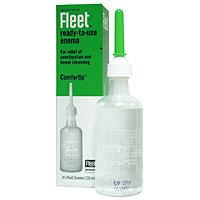
A mineral oil enema (brand name Fleet mineral oil enema) is an example of a lubricant laxative (see Figure 9.7c). It is used for acute or chronic constipation and fecal impaction.
Mechanism of Action
Mineral oil coats or lubricates stool and the intestinal walls and prevents reabsorption of water from the intestines. Water in the bowel softens and then expands the stool, leading to bowel distention, peristalsis and then defecation.
Administration Considerations
- Bowel movement in approximately 15 minutes.
- Side effects: stomach cramps, bloating, diarrhea
- Pediatric formulas available
- Risk of perforation for any enema, ensure well lubricated tip.
Client Teaching
- A mineral oil enema generally produces a bowel movement in 2 to 15 minutes.
- It may cause stomach cramps, bloating, upset stomach, or diarrhea.
- Pediatrics: read drug label carefully. Some formulas are not intended for children or children less than 2 years of age.
Stimulants
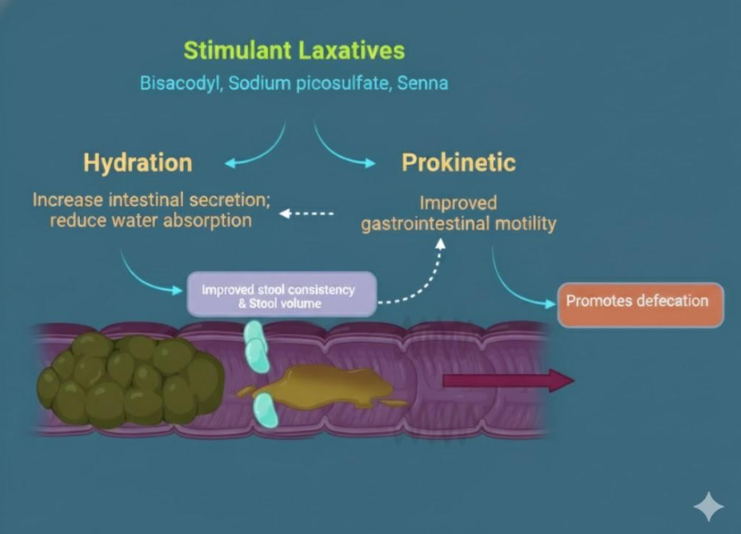
Stimulant laxatives can be used for constipation when other options are not successful or as part of a bowel cleanse. Bisacodyl (trade name Ducolax) and senna (trade name Sennokot) are two examples commonly used. Bisacodyl comes in both oral and rectal options.
Mechanism of Action
Stimulant laxatives irritate the colon by secreting mucous, water and electrolytes into the intestine to dilute the irritants, stimulating peristalsis to remove them from the body. The oral form of Bisacodyl is activated by bacterial intestinal enzymes as it enters the colon. Senna is a plant-derived compound that is also activated in the large intestine (Daniels & Schmelzer, 2013).
Administration Considerations
- Side effects: abdominal cramping, diarrhea
- Can cause dehydration if a large amount of diarrhea.
- Do not use with pregnancy or lactation.
- Senna often taken in the evening for BM in the morning. Works within 8-12 hours.
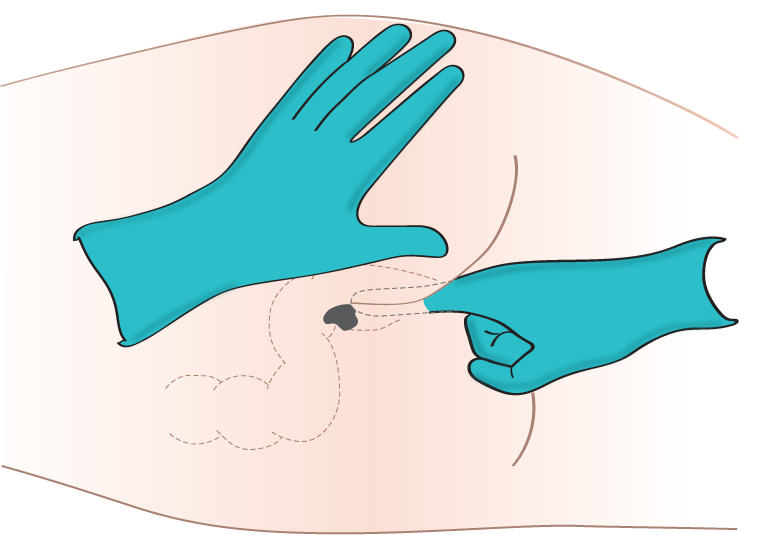
- Bisacodyl suppositories:
- work within 15 minutes.
- side effects: abdominal cramps, rectal burning, dizziness
- do not insert the supp into the rectal mass. Instruct client to retain suppository for 15-30 minutes (see Figure 9.7d).
Client Teaching
- Stimulants should be used for occasional constipation as tolerance can develop for the med. For ongoing constipation, further health teaching to manage constipation is advised.
- Oral senna or bisacodyl usually work within 6-10 hours. A strong and potent urge to defecate may occur, so advise to be close to a bathroom.
- Advise client of side effects
- Caution use with clients at risk for dehydration, especially if they experience significant diarrhea.
(Adams et al, 2019; Daniels & Schmelzer, 2013; Sealock & Seneviratne, 2019).
Comparing Laxative Medications
Now let’s take a closer look at the Comparing Laxative Medication Table to help with learning the material.
Medication cards or tables are intended to assist students to learn key points about each medication. Because information about medication is constantly changing, nurses should always consult current evidence-based resources before administering specific medication. Basic information related to each class of medication is outlined below.
Click on the link to access Stool Softeners and Laxatives to treat Constipation:
Table 9.7b Stool Softeners and Laxatives Used to Treat Constipation
Adapted from: Chippewa Valley Technical College; Egert, A., Lee, K, Gill, M. (2023). Fundamentals of Nursing Pharmacology (1st Canadian ed.). https://opentextbc.ca/nursingpharmacology/chapter/7-6-antidiarrheal-laxatives/ ; Daniels & Schmelzer, 2013; Sealock & Seneviratne, 2021.
Client Education to Manage Constipation
As one of the most common ailments, most people have experienced constipation at some point in their lives. Health teaching to help prevent or alleviate constipation should include lifestyle changes such as adequate hydration, dietary changes and exercise.
- Diet with fiber-rich foods such as fruits, vegetables such as broccoli, cabbage or spinach, and whole grain breads. Aim for 20-30 grams/day.
- Ensure to maintain hydration. Ensure to include exercise daily.
- Ensure good bowel habits: respond to the urge, set up a routine.
- If constipation is not managed with lifestyle changes, then stool softeners or laxatives should be considered.
Consult a health care provider for chronic constipation not relieved by lifestyle and the occasional use of laxatives.
For client who are pregnant or breastfeeding, bulk-forming laxatives are considered safe.
Comparing Stool Softeners and Laxatives
To support your learning, you can access the Chapter 9 Comparing Laxatives and Stool softeners table. This is a downloadable and editable document to allow you to update and add content.
Interactive Activities
Clinical Reasoning and Decision-Making Activity
A client who underwent hip surgery two days ago has not had a bowel movement since before admission. The client is receiving oxycontin ER 10 mg every 12 hours and oxycodone 5 mg every 4 hours for pain. The client describes abdominal discomfort and the nurse finds decreased bowel sounds in all quadrants. The nurse notifies the physician, follows the bowel protocol, and administers PEG 3350 to the client.
- What are the potential causes of constipation that should be addressed for this client?
- What is the mechanism of action for PEG 3350?
- The client asks how quickly the medication will work. What is the nurse’s best response?
- What other preventative measures for constipation should the nurse teach the client?
- If PEG 3350 is not effective within 24 hours, what other medications can the nurse anticipate to be ordered?
Note: Answers to the Clinical Reasoning Activities and Critical Thinking questions can be found in the Chapter 9: Gastrointestinal Medications Answer Key – Fundamentals of Nursing Pharmacology – 2nd Canadian Edition sections at the end of the book.
References
Adams, M., Urban, C., El-Hussein, M., Osuji, J. & King, S. (2018). Pharmacology for Nurses. A pathophysiological approach (2nd Canadian ed.). Chapter 35: Pharmacotherapy of Bowel Disorders and Other Gastrointestinal Alterations. Pearson Canada Inc: Ontario.
Daniels, G. & Schmelzer, M. (2013). Giving laxatives safely and effectively. Nursing Pharmacology MEDSURG nursing, 22(5), 290-302.
Diaz; S., Bittar; K., Hashmi; M., Mendez, M. (2023). Constipation. National Library of Medicine. StatPearls. Constipation – StatPearls – NCBI Bookshelf
Drugs.com [Internet]. Fleet mineral oil enema (rectal); © 1996-2018 [updated 1 October 2019; cited 27 October 2019]. https://www.drugs.com/mtm/fleet-mineral-oil-enema-rectal.html ↵
Lilley, L., Collins, S., & Snyder, J. (2014). Pharmacology and the Nursing Process. pp. 782-862. Elsevier. ↵
McCuistion, L., Vuljoin-DiMaggio, K., Winton, M, & Yeager, J. (2018). Pharmacology: A patient-centered nursing process approach. pp. 443-454. Elsevier. ↵
Mukherjee, S., Patel, P., John, S. (2023). Lactulose. National Library of Medicine. StatPearls [Internet]. https://www.ncbi.nlm.nih.gov/books/NBK536930/
National Institute of Diabetes and Digestive and Kidney Diseases, National Institute of Health. (2018). Treatment for constipation. https://www.niddk.nih.gov/health-information/digestive-diseases/constipation/treatment
RNPedia. (2021). https://www.rnpedia.com[/footnoteOpenMD.Com at openmd.com ↵
Sealock, K. & Seneviratne, C. (2021). Lilley’s Pharmacology for Canadian Health Care Practice (4th ed.). Chapter 40: Antidiarrheals and Laxatives. Elsevier: Canada
Media Attributions
- "MiraLax Mix-In Pax, Unflavored, 20 Little Packets" by Ava Williamsis licensed under CC0 and "Phillips' Milk of Magnesia, 1910's" by Roadsidepictures is licensed under CC BY-NC 2.0 ↵
- Figure 9.7a "Metamucil ad (cropped).jpg" by unknown is licensed under CC0↵
- Figure 9.7b Glycerin suppositories https://commons.wikimedia.org/wiki/File:Glycerin_suppositories.jpg
- Figure 9.7c "fleet_enema" by Logesh79is licensed under CC BY-NC 2.0 ↵
- Figure 9.7d Stimulant laxative mechanism of action (Sheila Odubote/ TRU Open Press)
- Figure 9.7e "Administering-med-rectally-2.png" by British Columbia Institute of Technology (BCIT) is licensed under CC BY 4.0↵

.jpg)
