4.9 Alpha-1 Antagonists V2
Tamsulosin is an Alpha-1 antagonist.
Indications for Use
Tamsulosin is used to treat benign prostate hypertrophy (BPH).
Benign Prostate Hypertrophy (BPH) is an abnormal enlargement of the prostate that decreases the outflow of urine by obstructing the urethra. It occurs in some men over the age of 40, with the incidence increasing to 70% of men over 60 years of age (Adams et al, 2018).
Factors that increase the risk for family history, smoking, heavy alcohol consumption, hypertension, diet high in protein and diabetes.
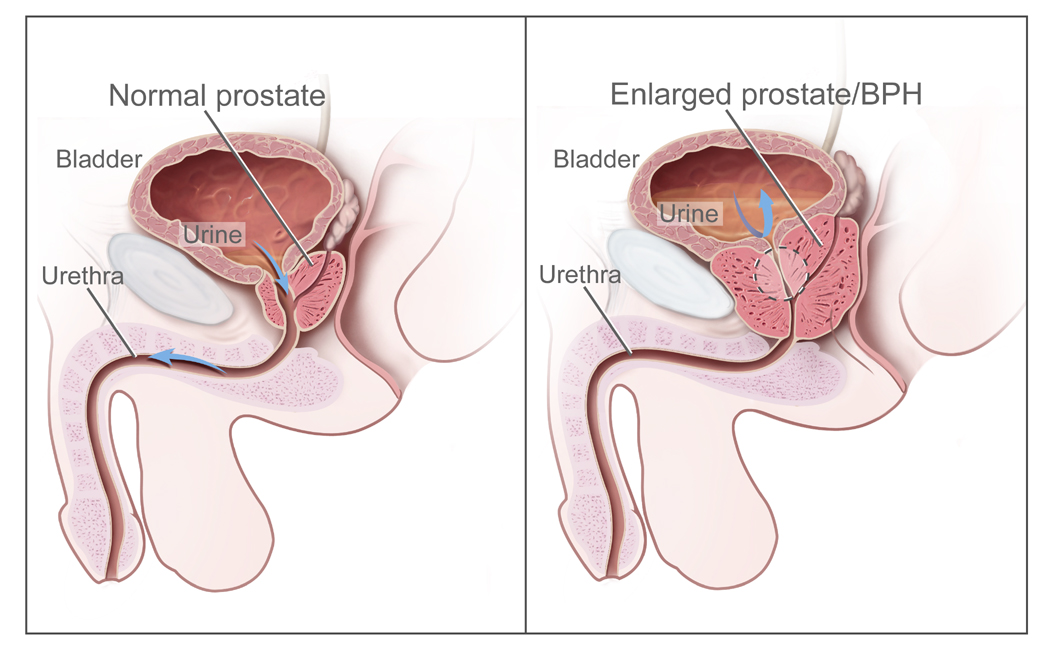
Treatment includes lifestyle changes and most often men are prescribed Tamsulosin or a 5-alpha reductase inhibitor Dutasteride. If medications are ineffective, transurethral resection of the prostate is considered.
Mechanism of Action
Tamsulosin selectively blocks alpha receptors in the prostate, leading to the relaxation of smooth muscles in the bladder, neck, and prostate, thus improving urine flow and reducing symptoms of benign prostatic hypertrophy (BPH).
Nursing Considerations
Assess urinary elimination including urinary retention, nocturia, dribbling, difficulty starting stream, frequency, urgency and sexual dysfunction.
Monitor:
- blood pressure especially with first time using tamsulosin, as orthostatic hypotension can occur.
- Improvement in urinary elimination
- Sexual function changes including impotence, decreased ejaculation volume and decreased libido.
Cautious use with hepatic dysfunction
Alpha-1 antagonists are not recommended for children under the age of 2 years old. They are safe to use in older adults, but dose adjustments need to be made based on kidney function. There is limited information about whether alpha-1 antagonists, such as tamsulosin, can be used in pregnancy.
Avoid using with other alpha-blockers. Tamsulosin is contraindicated with strong CYP3A4 inhibitors such as ketoconazole.
Adverse/Side Effects
- Orthostatic hypotension (first dose effect)
- Sexual function changes – decreased libido, impotence, decreased ejaculation volume
- Dizziness
Client Teaching
- Advise clients to change positions slowly because the drug may cause orthostatic blood pressure changes.
- Take the medication at the same time each day, 30 minutes after a meal.
- The client should follow up with their healthcare provider to assess the effectiveness of the medication (Vallerand & Sanoski, 2024).
Tamsulosin Medication Card
Now let’s take a closer look at the medication grid on tamsulosin (UpToDate, 2021, Vallerand & Sanoski, 2024). Because information about medication is constantly changing, nurses should always consult evidence-based resources to review current recommendations before administering specific medication.

Downloadable file (.docx): Tamsulosin Medication Card CH 4.9
Interactive Activity
References
- Adams, M., Urban, C., El-Hussein, M., Osuji, J. & King, S. (2018). Pharmacology for Nurses. A pathophysiological approach (2nd Canadian ed.). Pearson Canada Inc: Ontario.
- uCentral from Unbound Medicine. https://www.unboundmedicine.com/ucentral ↵
- UpToDate (2021). Tamsulosin. https://www.uptodate.com/contents/search ↵
- Vallerand, A. & Sanoski, C. (2024). Davis’s Canadian drug guide for nurses (19th ed.). F.A. Davis Company: Canada
Media Attributions
- Image 4.9a Benign Prostatic Hyperplasia nci-vol-7137-300 is from National Cancer Institute, AV Number: CDR462221 on Wikimedia Commons is in the public domain.