7.6 Cardiac Glycosides
Cardiac Glycosides
Digoxin is a cardiac glycoside medication that has been used for centuries to treat heart failure. It is derived from the foxglove plant Digitalis lanata. Currently it is one of the few positive inotropic drugs we see in practice. It is only used when first line treatments are not effective due to other drug’s having a higher safety profile and less adverse effects. It is mostly used to treat mild-to-moderate heart conditions, such as heart failure and chronic atrial fibrillation (David & Shetty, 2024).
Mechanism of Action
Digoxin exerts its effects through two mechanisms of action.
- Positive inotropic effect: Digoxin works by inhibiting the sodium and potassium pump, which results in an increase in intracellular sodium and an influx of calcium into cardiac cells, causing the cardiac muscle fibers to contract more efficiently and increase cardiac output (McCuistion et al, 2018).
- AV node inhibition: Digoxin stimulates the parasympathetic nervous system, slowing the conduction through the AV node, and reducing heart rate (David & Shetty, 2024).
Watch this short video to understand the MOA of digoxin:
Dr. Matt & Dr Mike (2017). Digoxin – Mechanism of Action
Digoxin has three effects on heart muscle:
- positive inotropic action (increases contractility, stroke volume and, thus, cardiac output),
- negative chronotropic action (decreases heart rate), and
- negative dromotropic action (decrease conduction of cardiac cells).
The inotropic effect of digoxin supports improving the heart’s ability to pump with more strength, but it is important to understand that being on digoxin too long can cause more heart failure. Imagine that you have an elastic hairband; eventually, as you stretch it repeatedly over time, it either loses its elasticity, or it breaks. The heart can only take so much force of contraction for so long before the stretch becomes exacerbated. Digoxin, although groundbreaking for heart failure, should really be saved for use closer to end stage heart failure to support the heart in the final stages (McCuistion et al, 2018).
Indications for Use
This medication is used as second-line treatment for clients who have heart failure or chronic atrial fibrillation. Digoxin is beneficial with heart failure with reduced ejection fraction of less than or equal to 40%. It is used as adjunct therapy in symptomatic heart failure despite optimal treatment. It is used for rate control in atrial fibrillations when other therapies have not been successful (David & Shetty, 2024).
Due to the risk for digoxin toxicity, the clinical use of digoxin has decreased as other medications are being used that have a higher safety profile and less adverse effects.
Pharmacokinetics
When digoxin is administered orally, it has a high bioavailability of 75%. The efficacy is reduced if taken with high-fiber foods. It is extensively distributed throughout the body, with the ability to cross the blood brain barrier and placental barrier. Digoxin is eliminated by the kidneys with a half life of 36 to 48 hours. Renal failure can prolong the half life due to lower drug clearance (David & Shetty, 2024).
Nursing Considerations
Administration: oral, IV, IM
- IV is preferred for rapid digitalization. Diluted or undiluted. Refer to drug monograph.
- Oral route: avoid taking med with high fiber foods as absorption will be decreased.
- Loading (digitalizing) dose followed by maintenance doses. Digoxin levels are monitored 6-12 hours after last loading dose to confirm steady state levels.
Pre-Treatment
- ECG prior to administering the first dose.
- Labs: electrolytes. Potassium must be within normal range as low potassium levels can lead to toxicity.
Monitor:
- Apical pulse should be taken for a full minute before administration of this medication. If the apical pulse is less than 60, the dose should be withheld and the physician notified.
- Monitor ECG (may be continuous with during IV digitalizing doses) and blood pressure.
- Serum digoxin levels should be monitored, with a normal therapeutic range from 0.8 to 2 ng/mL.
- Serum potassium levels should also be closely monitored as hypokalemia increases the effect of digoxin resulting in digoxin toxicity. Normal potassium level is 3.5 to 5.0 mEq/L, and a result less than 3.5 should be immediately reported to the prescriber.
- Closely monitor for signs of digoxin toxicity.
- Monitor renal function. Digoxin clearance is closely related to renal function, as measured by creatinine clearance.
- Assess: peripheral edema, lung sounds
- Dose adjustment: older adults, clients with renal insufficiency and clients with lean body mass are more susceptible to develop digoxin toxicity. Lower dosages are required. No dose adjustment for hepatic impairment.
Pregnancy: Digoxin crosses the placental barrier. Postpartum, monitor neonate for signs of toxicity. Digoxin levels in breast milk are very low.
Digoxin has a narrow therapeutic index, with the risk of toxicity leading to lethal dysrhythmias. To prevent toxicity, close monitoring for symptoms and regular follow up with digoxin levels, blood work (lytes, renal panel) and an ECG.
Digoxin serum levels 0.5-0.9 ng/mL (or 0.6 – 1.2 nmol/L). Monitor digoxin levels:
- at least 6-12 hours after first dose, then weekly until steady state levels are acheived.
- With each dose adjustment
- With any change in renal function
- With any change in electrolyte levels (i.e. sick with diarrhea, vomiting).
Treatment includes hydration and may include digibind.
Canadian Thoracic Society, 2023
Adverse/Side Effects
Side effects: GI symptoms, headache, weakness, dizziness, anxiety, depression, delirium, and hallucination (David & Shetty, 2024).
Digoxin toxicity can lead to fatal cardiac arrhythmias. Risk increases when digoxin levels exceed 2.0 ng/mL. May also occur with lower digoxin levels if impaired renal function, older adults, low body weight and hypokalemia.
Overdose or accumulation of digoxin can cause toxicity:
- Mild symptoms: Nausea, vomiting anorexia. Bradycardia often observed.
Neuro: lethargy, delirium, weakness.
Visual disturbances are common, such as blurry vision, halos or colour changes (Xanthopsia). Yellow-green tinted vision typically is associated with toxicity.
Hyperkalemia
- Cardiotoxic levels: increased automaticity (i.e. PVC’s), AV node block, slowed ventricular response. Can lead to ventricular dysrhythmias, ectopy and atrial tachycardias.
- Toxicity of this medication typically occurs at greater than 2 ng/mL, but some clients may have signs and symptoms at lower levels. Decreased renal function, hypokalemia, hypercalcemia, and hypomagnesemia may increase risk for digoxin toxicity.
If toxicity is expected: bloodwork that includes renal panel, electrolytes, digoxin level and an ECG. Assess for symptoms of toxicity.
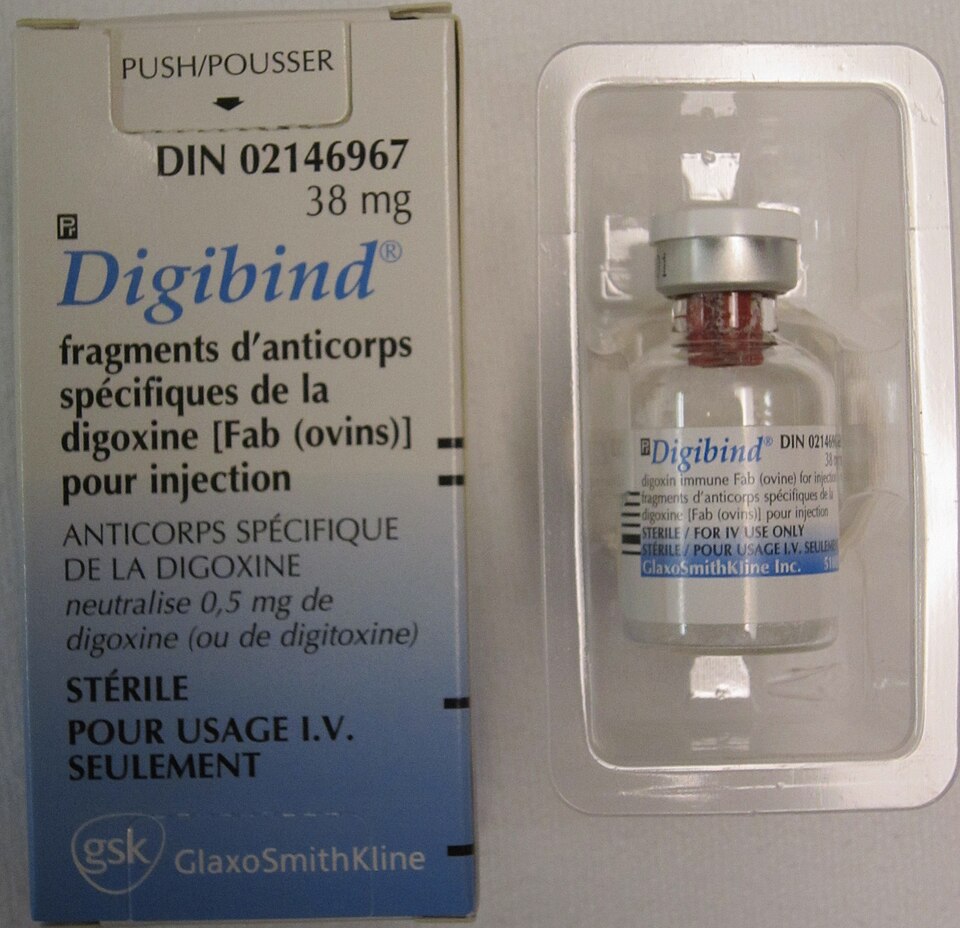
Management of Toxicity includes hydration, treating hyperkalemia (give glucose and insulin) and treating ventricular arrhythmias. May give digoxin immune Fab (Digibind) which binds to digoxin and prevents it from binding to active sites.
Client Teaching
- The client should be instructed to follow the prescribed dosing regimen and take medications at the same time each day. The client should be informed to not double up on medication doses. Consult the healthcare provider for follow-up instruction if two or more doses of medication are missed.
- Clients should monitor their pulse rate for one minute and report any pulse rate less than 60.
- Do not take digoxin with a high fiber meal. Avoid taking any antacids within 2 hours of dose.
- Inform client of symptoms of digoxin toxicity including low heart rate, vision changes and nausea. If they experience any signs of digoxin toxicity, contact the provider immediately.
- The medication should be stored in its original container and care should be taken not to mix the medication with other medications (Vallerand & Sanoski, 2024).
Digoxin Medication Card
Now let’s take a closer look at the medication card for digoxin in Table 6.7. Because information about medication is constantly changing, nurses should always consult evidence-based resources to review current recommendations before administering specific medication.

Downloadable file (.docx): Digoxin Medication Card
Clinical Reasoning and Decision-Making Activities
- Why should a nurse assess the apical pulse for 1 full minute before administering digoxin?
- How does a nurse evaluate whether digoxin is effective?
- Why must the nurse monitor serum potassium levels as well as digoxin levels?
- A nurse enters a patient’s room and the patient complains “My vision seems strange and I feel nauseated.” What is the nurse’s next best action?
Note: Answers to the Clinical Reasoning Activities and Critical Thinking questions can be found in the Chapter 7: Cardiovascular Medications Answer key – Fundamentals of Nursing Pharmacology – 2nd Canadian Edition section at the end of the book.
References
David, M, & Shetty, M, (2024). Digoxin. National Library of Medicine. StatPearls [Internet]. https://www.ncbi.nlm.nih.gov/books/NBK556025/
McCuistion, L., Vuljoin-DiMaggio, K., Winton, M, & Yeager, J. (2018). Pharmacology: A patient-centered nursing process approach. pp. 443-454. Elsevier. ↵
Vallerand, A. & Sanoski, C. (2024). Davis’s Canadian drug guide for nurses (19th ed.). F.A. Davis Company: Canada
Media Attributions
- Figure 7.6a A vial of Digibind, by James Heilman, MD on Wikimedia Commons is used under a CC BY-SA 3.0 license.