
8.5 Antihistamines
Antihistamines are used to mitigate conditions that are mediated by histamine. Histamine-1 antihistamines, such as diphenhydramine, chlorpheniramine, and dimenhydrinate are used for respiratory inflammatory conditions (allergies, angioedema, sinusitis) and motion sickness. This is not to be confused with histamine-2 receptor antagonists, such as famotidine.
Diphenhydramine and Cetirizine are two commonly-seen antihistamine drugs. Our prototype medication will be diphenhydramine.
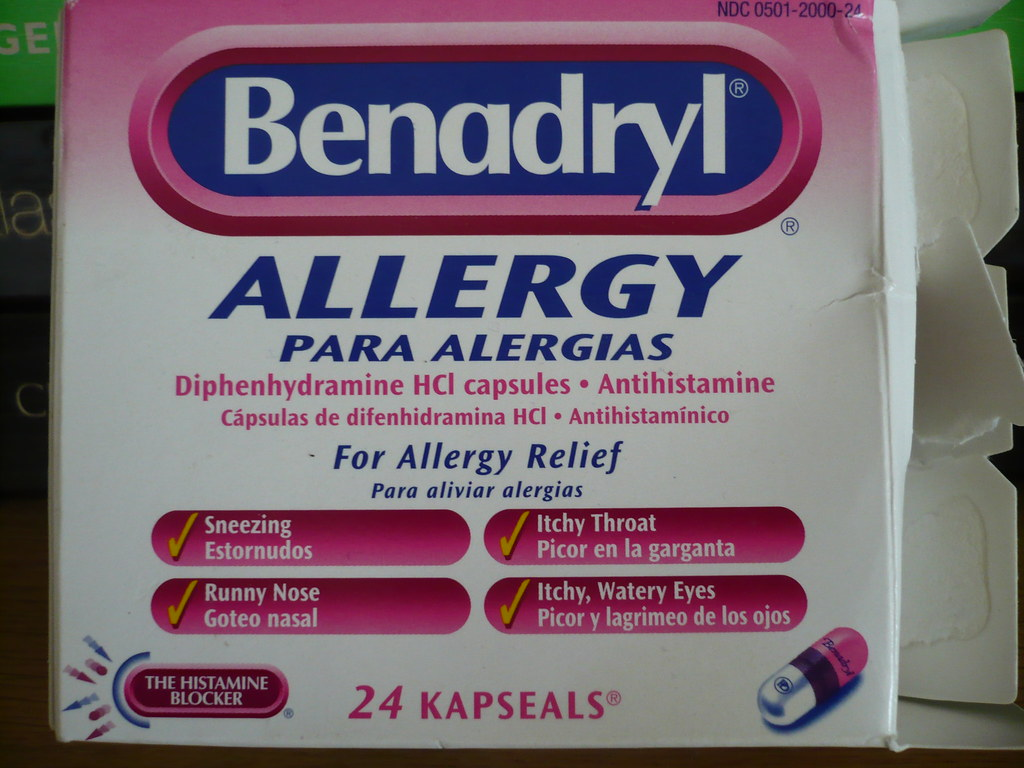
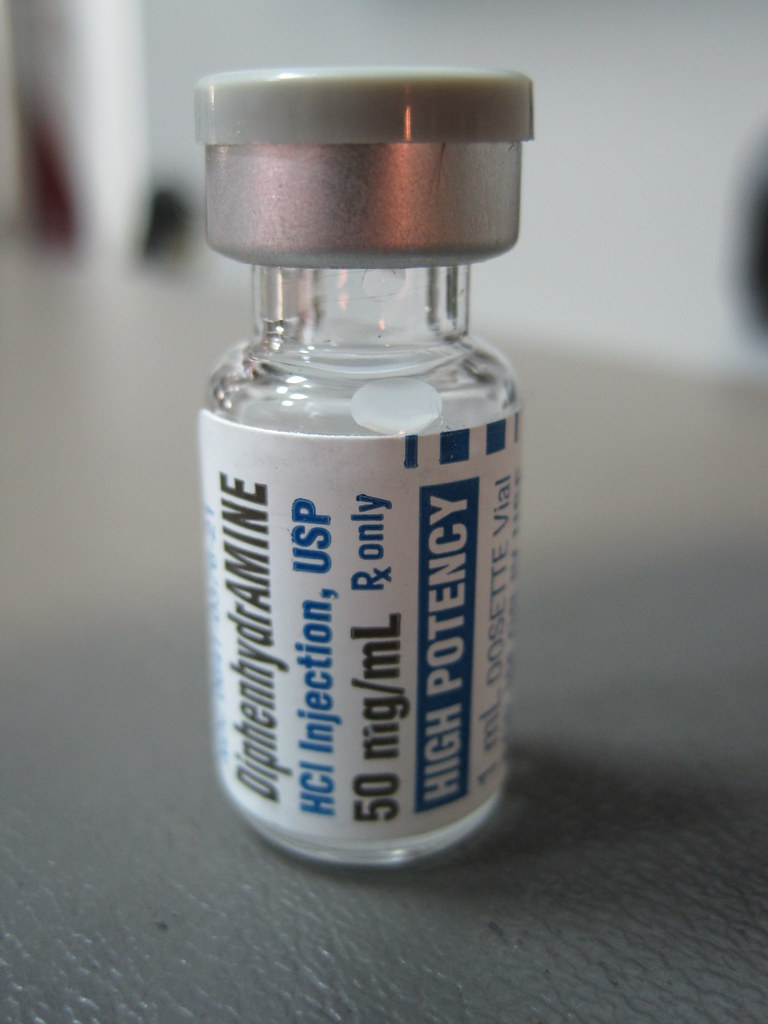
Diphenhydramine is an example of a first-generation antihistamine. (See Figures 8.5a and 8.5b) Second-generation antihistamines were developed to have fewer side effects. An example of a second-generation antihistamine is cetirizine.
Mechanism of Action
Antihistamines have the following mechanisms of action: H1 receptor antagonism reduces the effects of histamine. Some of these effects are vasodilation (inhibiting histamine mediated vasoconstriction), respiratory tract and GI tract), decreasing capillary permeability, decreasing bronchoconstriction, decreasing salivation, and tear formation. Diphenhydramine is highly lipophilic and readily crosses the blood-brain barrier antagonizing central H1 receptors, causing sedation and anticholinergic effects. It antagonizes both central and peripheral H1 receptors resulting in decreased vascular permeability.
What is histamine?
Histamine is present within all body tissues, but has the highest concentration in the lungs, basophils, and mast cells. It also is a potent vasoactive agent through its effect on bronchial smooth muscles and nociceptive itch nerves. In response to an allergen or stimulus, activation of the H1 receptors causes pruritus, vasodilation, flushing, tachycardia and bronchoconstriction (Patel & Mohiuddin, 2023).
Indications for Use
Diphenhydramine is used for relief of allergies or cold symptoms. It provides relief from hay fever or upper respiratory allergy symptoms that include runny nose, sneezing and itchy eyes, nose or throat. It can also be used for motion sickness.
Nursing Considerations
Administration: oral, IM and IV; 25-50 mg (adult). Oral dosages can be given with a meal or milk to decrease GI irritation.
Use with caution in severe liver disease, angle-closure glaucoma, prostatic hypertrophy and peptic ulcer disease.
Used for many uses so understand purpose of giving the med.
Pediatrics: This medication is not safe for children under the age of 2 years without a healthcare provider’s order.
Older adult: increased susceptibility to anticholinergic effects, such as delirium, dizziness, dry mouth, urinary retention, constipation. Increased risk of falls. Give a smaller dose, or avoid.
Drug Interactions:
- CNS depressants such as benzodiazepines, opioids, or alcohol. Can lead to additive CNS and respiratory depression, increasing sedation, hypoventilation, and fall risk.
- Use with other CNS medications such as tricyclic antidepressants and antipsychotics can lead to anticholinergic and sedative effects. Assess for dry mouth, constipation, urinary retention, and delirium.
- Caution with promethazine as it can contribute to prolonging QT interval and risk of torsades de pointes.
Adverse/Side Effects
- Common side effects include sedation, cognitive impairment, and anticholinergic adverse effects such as dry mouth, urinary retention, constipation, and blurred vision.
- CNS depression especially if used with other CNS depressants such as opioids, hypnotics, alcohol.
- CNS stimulation with excessive doses can occur, especially in children.
- At higher doses: dizziness, tinnitus, and delirium.
Client Teaching
- Clients should be advised that antihistamines may cause drowsiness, and concurrent use of alcohol or other CNS depressants should be avoided.
- Only take the recommended amount of medication and not exceed dosing recommendations.
- Inform client of potential anticholinergic effects such as dry eyes, constipation, urinary retention, dizziness.
- Some clients may experience side effects such as dry mouth, and frequent oral hygiene may assist in alleviating discomfort.
(Frandsen, & Pennington, 2018; Vallerand & Sanoski, 2024).
Diphenhydramine Medication Card
Now let’s take a closer look at the medication card for diphenhydramine. Medication cards are intended to assist students to learn key points about each medication class. Basic information related to a common generic medication in this class is outlined, including administration considerations, therapeutic effects, and side effects/adverse effects. Because information about medication is constantly changing, nurses should always consult evidence-based resources to review current recommendations before administering specific medication.

Downloadable file (.docx): Diphenhydramine Medication Card
Media Attributions
- “Benadryl Allergy USA” by ZenBenjamin is licensed under CC BY-NC-SA 2.0 ↵
- “diphenhydramine (1)” by Intropin is licensed under CC BY-NC 2.0 ↵
References
Farzam, K., Sabir, S. & O’Rourke, M. (2025). Antihistamines. National Library of Medicine. StatPearls. Antihistamines -StatPearls – NCBI Bookshelf
Frandsen, G. & Pennington, S. (2018). Abrams’ clinical drug: Rationales for nursing practice (11th ed.). Wolters Kluwer. ↵ ↵
Patel, R. & Mohiuddin, S. (2023). Biochemistry, histamine. National Library of Medicine. StatPearls. Biochemistry, Histamine – StatPearls – NCBI Bookshelf
Vallerand, A. & Sanoski, C. (2024). Davis’s Canadian drug guide for nurses (19th ed.). F.A. Davis Company: Canada

.JPG)