4.5 Nicotine Receptor Agonists
Smoking tobacco is the leading preventable cause of disease and premature death worldwide. In Canada, tobacco use kills one in two long-term users and causes many chronic illnesses such as cancer, respiratory ailments and heart disease. Approximately 37,000 Canadians die from tobacco use each year (Government of Canada, 2023). The percentage of Canadians smoking has decreased considerably over the years, from approximately 50% of adults smoking in 1965, to approximately 13% in 2022 (School of Public Health Services n.d.). This decrease can be attributed to a number of initiatives by the Canadian Tobacco Strategy that includes improving services and resources to assist in quitting smoking and public education.
Nicotine replacement therapy (NRT) is part of a comprehensive behavioral smoking cessation program for those clients who wish to quit smoking without going through the withdrawal symptoms associated with quitting abruptly. Withdrawal symptoms usually peak in 2-3 days after quitting and include restlessness, increased appetite, depression or irritability, and intense cravings for another cigarette (Sandhu, Hosseini & Saadabadi, 2024). NRT offers a safer alternative to using tobacco, as NRT has none of the harmful chemicals such as carbon monoxide.
Indications for Use
Nicotine Replacement Therapy (NRT) is an aid to smoking cessation and for the relief of nicotine withdrawal. It offers a controlled way to reduce nicotine dependence and provides a safer way to provide the body with nicotine while being gradually weaned off.
Mechanism of Action
Nicotine inhalation diffuses across lung tissue, into the systemic circulation and then to the different parts of the body. Nicotine binds to and activates nicotinic acetylcholine receptors, mimicking the effect of acetylcholine at these receptors. These receptors are located in the brain, neuromuscular junctions, adrenal medulla, and ganglia. Nicotine also influences the reward center in the limbic system and stimulates dopamine release leading to a pleasurable and rewarding experience. NRT is designed to mimic these effects and with progressively lower doses, it can decrease the cravings and withdrawal symptoms (Sandhu, Hosseini & Saadabadi, 2024).
Nursing Considerations
Administration: It is available in patches, lozenges, inhalers, sprays and gum. They deliver a controlled amount of nicotine to the body and can increase the chance of quitting by 50-70%. The client will start on NRT and keep the same dose for 4 weeks, then gradually taper their dose of NRT.
- Dosing: Dosing depends on the number of cigarettes smoked each day. Depending on the route, there is a wide range of mg delivered.
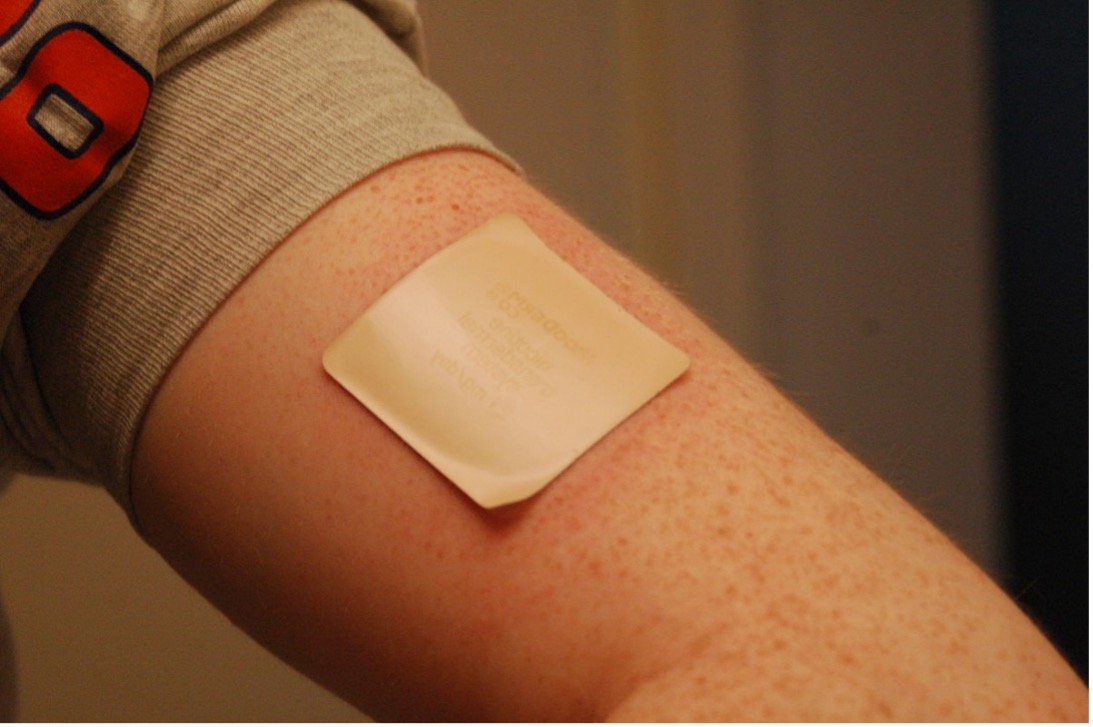
- Transdermal patch: 5-52.5 mg once daily application. Higher dosages are for heavy smokers. May be worn 24 hours/day, or if vivid dreams or unable to sleep, remove patch before bedtime.
- Nicotine gum: Can be used alone or with the patch. If used with a patch, it is on a PRN basis to manage withdrawal symptoms.
Children, Pregnancy and Breastfeeding
Nicotine is not recommended for children or pregnant women. Based on available data, it is generally safer to nicotine replacement therapy (NRT) when compared to cigarette smoking, although not risk-free. Although NRT does not contain carbon monoxide or hydrogen cyanide, two toxic compounds that can harm fetal development (UpToDate, 2021), it should only be used with clinical guidance.
Hospitalized Clients
For clients who smoke and are admitted to the hospital, Nicotine Replacement Therapy will be ordered and should be initiated as soon as possible after admission. Withholding or delaying therapy will precipitate withdrawal symptoms. See the preprinted orders in your facility. The amount of milligrams /patch ordered will be based on the usual amount of tobacco use per day.
Example in Practice:
A client is admitted to the hospital with heart failure. The nurse completes their medical history and med profile. The nurse learns they smoke cigarettes. The Nicotine Replacement Therapy orders are initiated.
If they smoke ____cig/day, the concentration of the patch will be:
7 cigarettes/day – 7 mg/day
10-20 cigarettes/day – 14 mg/day
21-30 cigarettes/day – 21 mg/day
Along with the patch, they may also be offered Nicotine gum for managing withdrawal symptoms. Nicotine gum: 2 mg one-piece q 1-2h prn (max: 15 pieces/day)
The nurse recalls that NRT should be cautiously used with cardiac clients. She confirms with the prescriber that it should not be ordered if the client has had a myocardial infarction in the last 2 weeks, those with serious arrhythmias or with unstable angina pectoris. The nurse will assess the client for nicotine withdrawal symptoms and offer nicotine gum PRN.
Adverse/Side Effects:
- Allergic reaction: Discontinue use and call provider if an allergic reaction occurs, such as difficulty breathing or rash, or symptoms of nicotine overdose occur, such as nausea, vomiting, dizziness, weakness, and rapid heartbeat.
- Skin reaction: local skin reaction occurs with 50% of users. Usually mild and self-limiting. Can treat with hydrocortisone cream (1%). Ensure to rotate patch sites
- May also cause vivid dreams or sleep disturbances. If these occurrences occur, clients should be counselled to remove the patch at bedtime and apply a new one in the morning.
Province of British Columbia, 2012; Sandhu, Hosseini, & Saadabadi, 2023.
Client Teaching
The client should stop smoking completely while on nicotine replacement therapy to avoid additive nicotine levels higher than smoking alone. Advise clients that participating in a comprehensive smoking cessation program improves success.
Application:
- Wash hands after applying or removing the patch.
- Apply one new patch every 24 hours on skin that is dry, clean, and hairless.
- Remove backing from patch and immediately press onto skin. Hold for 10 seconds.
- Apply to clean, hairless and dry area of upper body or arm.
- Dispose of the used patches by folding sticky ends together and putting in pouch.
- The used patch should be removed and a new one applied to a different skin site at the same time each day. Do not apply more than one patch at a time.
If using a nicotine patch, client should be aware that skin sensitivity at the site of patch placement typically resolves within one hour (uCentral, n.d.).
Alert: Advise client to keep all nicotine products, including used inhaler cartridges, nasal spray bottles, and patches out of the reach of children and pets.
Nicotine Patch Medication Card
Now let’s take a closer look at the medication card on nicotine patch (UpToDate, 2021). Medication cards assist students to learn key points about each medication class. Basic information related to a common generic medication in this class is outlined, including administration considerations, therapeutic effects, and side effects/adverse effects. Because information about medication is constantly changing, nurses should always consult evidence-based resources to review current recommendations before administering specific medication.

Downloadable file (.docx): Nicotine Patch Medication Card
Interactive Activity
References
- Government of Canada (2022). Smoking in Canada: what we know. https://www.canada.ca/en/health-canada/services/smoking-tobacco/surveys-statistics-research/smoking-what-we-know.html
- Province of British Columbia (2012). Nicotine Replacement Therapy Guidance Document.
- www.ipp.gov.bc.ca
- Sandhu, A., Hosseini, S.A., Saadabadi, A. (2023). Nicotine Replacement Therapy. National Library of Medicine. StatPearls.
- School of Public Health Services (n.d.). Smoking use in Canada. University of Waterloo. https://uwaterloo.ca/tobacco-use-canada/adult-tobacco-use/smoking-canada/historical-trends-smoking-prevalence
- UpToDate. (2021). Nicotine: Drug Information. https://www.uptodate.com/contents/search ↵
- uCentral from Unbound Medicine. https://www.unboundmedicine.com/ucentral
Media Attributions
- Figure 4.5a Transdermal Nicotine Patch by RegBarc [assumed] on Wikimedia Commons is used under the CC BY-SA 3.0 license.