4.6 Muscarinic Receptor Agonists V2
Pilocarpine is a muscarinic receptor agonist.
Indications for Use:
Pilocarpine is used to treat ophthalmic conditions such as elevated intraocular pressure and glaucoma.
It is also used to treat dry mouth due to salivary gland hypofunction to help alleviate symptoms and prevent complications such as dental caries, gingivitis, and halitosis. Hypoactive salivary gland function can be due to radiation therapy for head and neck cancer or to treat dry mouth related to Sjogren’s syndrome. Pilocarpine will stimulate residual salivary flow and provide lubrication (Medline Plus, 2025).
Mechanism of Action:
Pilocarpine causes the ciliary muscle to contract, allowing for the drainage of aqueous humor from the anterior chamber of the eye and reducing intraocular pressure related to glaucoma and ocular hypertension.
Nursing Considerations:
Muscarinic receptor agonists, such as pilocarpine, can be used in children and older adults. There are no necessary dose adjustments for kidney or liver dysfunction in older adults.
Used as a treatment to manage symptoms of dry mouth or elevated ocular pressures. Due to frequency of dosing and side effects, it is often not first line treatment.
Ophthalmic:1 drop into affected eye 3-4 times/ day. Remove contact lens before administration. Apply light finger pressure on lacrimal sac for 2 minutes after instilling to minimize systemic absorption (Adams et al, 2018).
Oral: 1 tablet 3-4 times/day
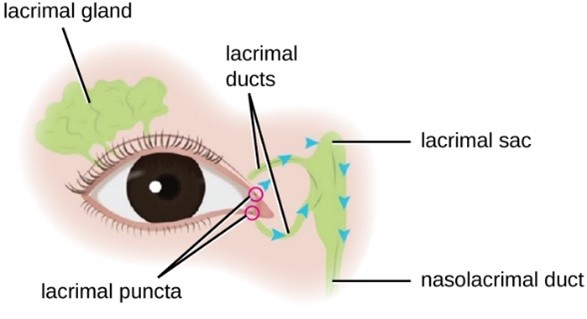
- Figure 4.6a Lacrimal Sac (OpenStax Microbiology – modification of work by “Evidence Based Medical Educator Inc.”/YouTube) CC BY 2.0 licence.
Adverse/Side Effects:
Common side effects include:
- Headache or brow ache
- Temporary blurred vision or difficulty seeing in dim light
- Eye irritation, stinging, or redness
- Increased sweating and salivation (more common with oral tablets)
Adverse effects include heart rate changes, hypotension and vision changes (light flashes, floaters). See the prescriber for any adverse effect.
Client Teaching:
- Advise the client to use caution with night driving.
- This medication can cause hypotension (Medline Plus, 2025).
- Inform prescriber if pregnant or if going for surgery.
Pilocarpine Medication Card
Now let’s take a closer look at the medication card on pilocarpine.[2] Because information about medication is constantly changing, nurses should always consult evidence-based resources to review current recommendations before administering specific medication.

Downloadable file (.docx): Pilocarpine Medication Card
Interactive Activity
References
Adams, M., Urban, C., El-Hussein, M., Osuji, J. & King, S. (2018). Pharmacology for Nurses. A pathophysiological approach (2nd Canadian ed.). Pearson Canada Inc: Ontario.
Evidence Based Medical Educator Inc. (2014, February 23). Eye anatomy chapter 8: The lacrimal gland [Video]. YouTube. https://www.youtube.com/watch?v=d2CWgLPfTPA
Medline Plus (2025). Pilocarpine. National Library of Medicine. Pilocarpine: MedlinePlus Drug Information
uCentral from Unbound Medicine. https://www.unboundmedicine.com/ucentral ↵
Media Attributions
- Figure 4.6a: Lacrimal Sac is by OpenStax Microbiology, originally adapted from work by “Evidence Based Medical Educator Inc.”/YouTube: https://www.youtube.com/watch?v=d2CWgLPfTPA. used under a CC BY 2.0 licence by OpenStax.