12.18 Antiprotozoals
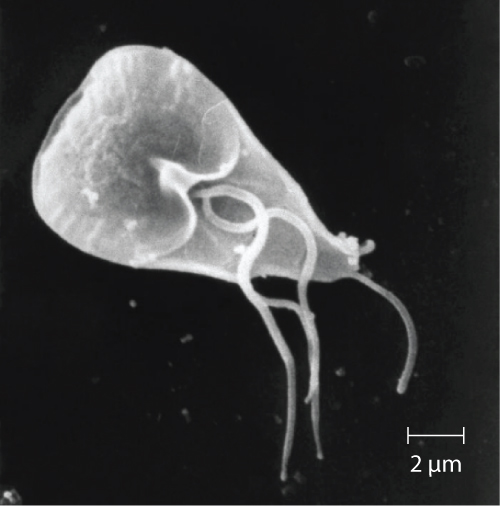
Antiprotozoal drugs target infectious protozoans such as Giardia, an intestinal protozoan parasite that infects humans and other mammals, causing severe diarrhea (see Figure 12.18 for a microscopic image of Giardia). [1]
Indications:
Metronidazole is an example of an antiprotozoal antibacterial medication that is commonly used to treat a range of infections taht effect the reproductive system, gastrointestinal (GI) tract, skin, heart, bone, joint, lung, blood, nervous system, and other areas of the body. It is used for conditions such as acne rosacea, bacterial vaginosis, or trichomonas. Metronidazole IV is used to treat Giardia and also serious anaerobic bacterial infections such as Clostridium difficile (C-diff) (MedLine Plus, 2023).
Mechanism of Action:
Many antiprotozoal agents work to inhibit protozoan folic acid synthesis, subsequently impairing the protozoal cell.[2]
Nursing Considerations:
It can be administered PO, parenterally, or topically. Orally is the preferred route for GI infections. Do not crush or chew extended release tablets. Take with food to avoid GI upset.
Drug Interactions:
- Alcohol: Causes severe vomiting/nausea and psychotic reactions.
- Warfarin: Increases the risk of bleeding.
- Other meds: Lithium, phenytoin, and busulfan
Common side effects include nausea and vomiting, headache, dizziness, diarrhea or constipation. It may cause a metallic taste in the mouth.
Adverse effects such as seizures, peripheral neuropathies, and dizziness may occur.
Client Teaching:
- Discuss with the client the need to take the med as prescribed.
- Inform the client that the medication may cause dizziness, dry mouth, nausea and headache. Additionally, the medication may cause darkening of the urine.
- Discuss good oral hygiene to minimize a metallic taste in the mouth.
- Avoid alcoholic beverages during medication therapy to prevent a disulfiram-like reaction.
- If clients are being treated for protozoal infections such as trichomoniasis, they should be advised that sexual partners might be sources of reinfection even if asymptomatic. Partners should also receive treatment.[3]
Clinical Reasoning and Decision-Making Activity
Using the above information, consider the following clinical scenario question:
A 58 year old client develops C-diff after taking multiple antibiotics for a non-healing wound. They are prescribed metronidazole. What would be important health teaching with this med.
Note: Answers to the Clinical Reasoning Activities and Critical Thinking questions can be found in the Chapter 12: Antimicrobial Medications answer key – Fundamentals of Nursing Pharmacology – 2nd Canadian Edition sections at the end of the book.
References
-
“Giardia lamblia SEM 8698 lores.jpg” by CDC/ Janice Haney Carr is licensed under CC0 ↵
-
This work is a derivative of Microbiology by OpenStax licensed under CC BY 4.0. Access for free at https://openstax.org/books/microbiology/pages/1-introduction ↵
-
uCentral from Unbound Medicine. https://www.unboundmedicine.com/ucentral ↵
-
Medline Plus (2023). Metronidazole. Metronidazole: MedlinePlus Drug Information