
11.6 Semaglutide: Glucagon 1 Peptide agonist (GLP1) V2
Semaglutide, a glucagon-like peptide-1 (GLP-1) receptor agonist, is used for glycemic control in type 2 diabetics and is also used for weight management. There are three separate brand name medications. Ozempic and Rybelsus are both typically used for glycemic control for diabetics and to reduce CV risk. Wegovy was developed for weight management in obesity. Both Wegovy and Oxempic are subcutaneous injections. Rybelsus is an oral preparation used for glycemic control. The differences between the medications are the formulation and dosages.
In this unit, we will focus on Ozempic and Rybelsus. As mentioned, Ozempic and Rybelsus are used to improve glycemic control for type 2 diabetic adult clients, and to also reduce the risk of adverse cardiovascular (CV) events with type 2 diabetes and CV disease. It is also used to reduce the risk of a sustained GFR decline with end-stage kidney disease (Med Scape, 2025).
Mechanism of Action
Ozempic and Rybelsus are semaglutide medications that work by mimicking GLP-1 incretin, a naturally occurring hormone released from the intestine after a meal. GLP-1 receptors are in various locations in the body such as the pancreas, liver, and in the stomach. Upon activation of the GLP-1 receptor, semaglutide does a number of actions:
- enhances glucose-dependent insulin secretion, providing a physiological response to elevated blood glucose levels after a meal.
- it slows gastric emptying,
- increases pancreatic β-cell proliferation,
- reduces glucagon release, contributing to an overall reduction in appetite.
- in the hypothalamus, it may mitigate sensations of hunger, alleviate food cravings, and enhance the feelings of satiety.
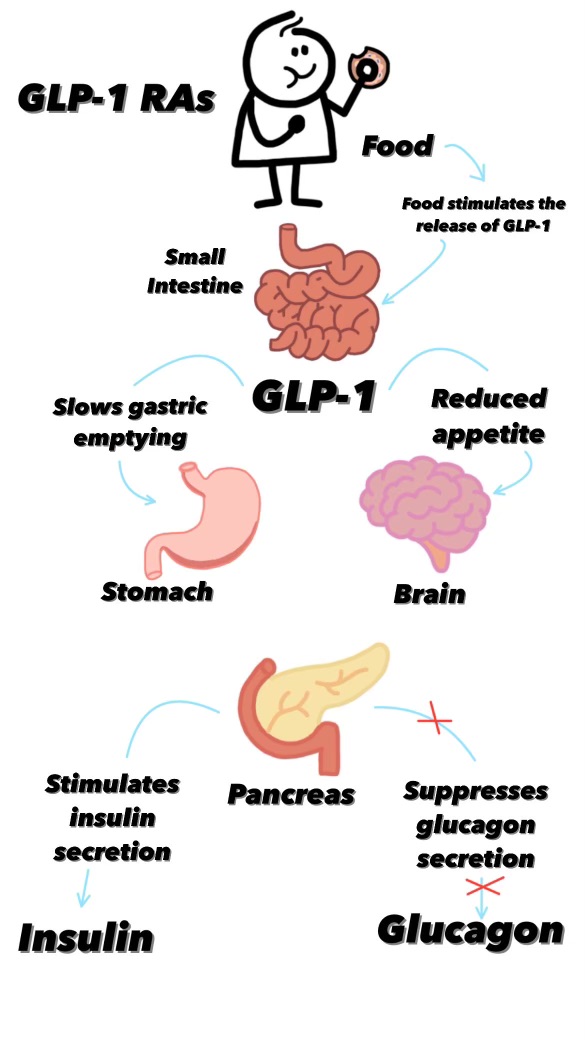
By Myluckynumber7 – Own work, CC BY 4.0, https://commons.wikimedia.org/w/index.php?curid=149634259
Jessica/Mar 19: @Copyeditor Please find image source above.
In simple terms, GLP-1, which Semaglutide is similar to, regulates digestion and blood sugar. The small intestine releases GLP-1 when food is eaten. It reduces hunger, signals fullness, stimulates insulin, and inhibits glucagon, maintaining glucose levels.
These actions all help manage blood glucose levels and facilitate weight loss by delaying gastric emptying. The use of semaglutides should always be used along with diet and exercise for enhancing glycemic control in adults with type 2 diabetes mellitus (Kommu & Whitfield, 2024).

Figure 11.6b Ozempic, a Semaglutide injection pen By Dennis Sylvester Hurd – Saturdays, CC0, https://commons.wikimedia.org/w/index.php?curid=175778404 Ozempic (53899794358).jpg
Jessica/Mar 19: @Copyeditor Please find image source above.
Nursing Considerations
Administration:
- Ozempic: subcutaneous injection, starting with a low dose of 0.25mg weekly for 4 weeks, and then titrated up to 0.5mg weekly depending on glycemic control. The SQ injections are given weekly to a maximum dose of 2mg/week.
- Rybelsus: oral dosing, taken once a day. Depending on the formulation, dosages are gradually titrated up (MedScape, 2025). Onset of action is one hour, with steady state reached in 4 to 5 weeks of daily administration. For optimal absorption, administer at least 30 minutes before consuming food, beverages or other medications. Take with 120 mL of water (Kommu & Whitfield, 2024).
Monitor blood glucose levels and A1C prior to therapy and throughout treatment.
No dose adjustments for renal and hepatic impairments.
Drug Interactions
- Numerous drug interactions can occur which is attributed to the delay in gastric emptying leading to a delay in absorption of concurrently administered oral medications. There are no reported absorption delays with Ozempic, which is given SQ, and oral meds.
- Medications that can increase the hypoglycemic effects of semaglutide include beta blockers, monoamine oxidase inhibitors, salicylates, selective serotonin reuptake inhibitors, and other antidiabetic medications.
- Medications that can decrease the effects of semaglutides include furosemide and thiazide diuretics.
- Semaglutide may increase the serum concentrations of levothyroxine.
(Kommu & Whitfield, 2024)
Discontinuing semaglutides: for clients on semaglutides for weight loss, rebound weight gain of two-thirds of the initial weight loss can occur after one year. Semaglutides are considered a long-term treatment.
Adverse/Side Effects
The most common side effect is nausea. Other GI effects include abdominal pain, diarrhea, constipation, decreased appetite and dyspepsia.
Hypoglycemia: GLP-1 agonists lower blood glucose levels. As doses are increased, risk increases. Higher risk of hypoglycemia also occurs if taken with anti-hyperglycemic medications such as sulfonylureas, metformin, or insulin.
Acute Kidney Injury: For clients who experience nausea, vomiting, diarrhea, or dehydration during the treatment are at higher risk of acute kidney injury.
Other adverse effects include gallbladder issues such as cholelithiasis and cholecystitis, retinopathy, and pancreatitis.
Client Teaching
- Inform client to take the medication as prescribed. Do not double doses.
- Continue to maintain healthy lifestyle with diet and exercise.
- Administer SQ injection weekly, rotate sites in upper arm, thigh and abdomen.
- May cause nausea. To minimize the nausea, eat smaller, frequent meals.
- Report any signs of pancreatitis (upper abdominal pain, fever, anorexia), change in urination, or vision changes immediately.
- Limit alcohol intake.
- Inform prescriber if pregnant or plan to become pregnant.
(Mayo Clinic, 2025).
References
Kommu, S. & Whitfield, P. (2024). Semaglutide. National Library of Medicine. StatPearls [Internet]. Semaglutide – StatPearls – NCBI Bookshelf
Mayo Clinic (2025). Semaglutide. Semaglutide (subcutaneous route) – Side effects & dosage – Mayo Clinic
Medscape (2025). Semaglutide. Ozempic, Rybelsus, Wegovy (semaglutide) dosing, indications, interactions, adverse effects, and more
Media Attributions
- Figure 11.6a Mechanism of action of semaglutides By Myluckynumber7 – Own work, CC BY 4.0, https://commons.wikimedia.org/w/index.php?curid=149634259
- Figure 11.6b Ozempic, a Semaglutide injection pen By Dennis Sylvester Hurd – Saturdays, CC0, https://commons.wikimedia.org/w/index.php?curid=175778404 Ozempic (53899794358).jpg

.jpg)