9.6 Antidiarrheal Medications
Diarrhea is a common complaint and is defined as “an increase in the frequency and fluidity of bowel movements.” (Adams et al, 2019, p. 417). It occurs when not enough water is removed from the stool during transit, making the stool loose and poorly formed. Diarrhea can be self-limiting or chronic. It can be a defensive process to remove toxins, bacteria, viruses, or protozoa from the GI tract.
Causes of Diarrhea
- Infections: viral or bacterial infections most common cause. Helminths or parasites found in contaminated food or water
- Medications such as antibiotics can kill off normal flora, allowing opportunistic growth of organisms.
- Food intolerances such as lactose intolerance
- Diseases of the colon: inflammation of the bowel from Chron’s disease or irritable bowel syndrome can lead to diarrhea.
Following an assessment that includes vital signs, health history and med profile, and a GI assessment (physical assessment along with history of bowel patterns and stool characteristics), it may be recommended to take an anti-diarrheal medication. Anti-diarrheal medications can be taken if diarrhea is prolonged or severe, but typically diarrhea does not need to be treated. If the diarrhea is severe, it can lead to fluid and electrolyte losses. Children and the elderly are particularly susceptible to dehydration related to diarrhea and should be treated more urgently.
There are three common mechanisms of action of antidiarrheal medications:
- adsorbents, which help eliminate the toxin or bacteria from the GI tract.
- antimotility agents, which slow peristalsis. Two types: anticholinergics and opiate-like meds
- probiotics, which help to restore the normal bacteria found in the lower intestine.
Nurses should closely monitor for dehydration; oral rehydration agents may be needed to replace fluid and electrolyte loss, but they do not treat diarrhea. Antibacterial agents may also be used to treat diarrhea caused by specific infections, such as campylobacter or giardia, but they are not routinely needed (Lilley, Collins & Snyder, 2014).
Choosing which anti-diarrheal will depend on the cause and the severity of the symptoms. For example, if the diarrhea is related to food poisoning, taking an adsorbent, might be useful. Often the cause of the diarrhea is not known and is only assumed through assessing the client.
Adsorbents
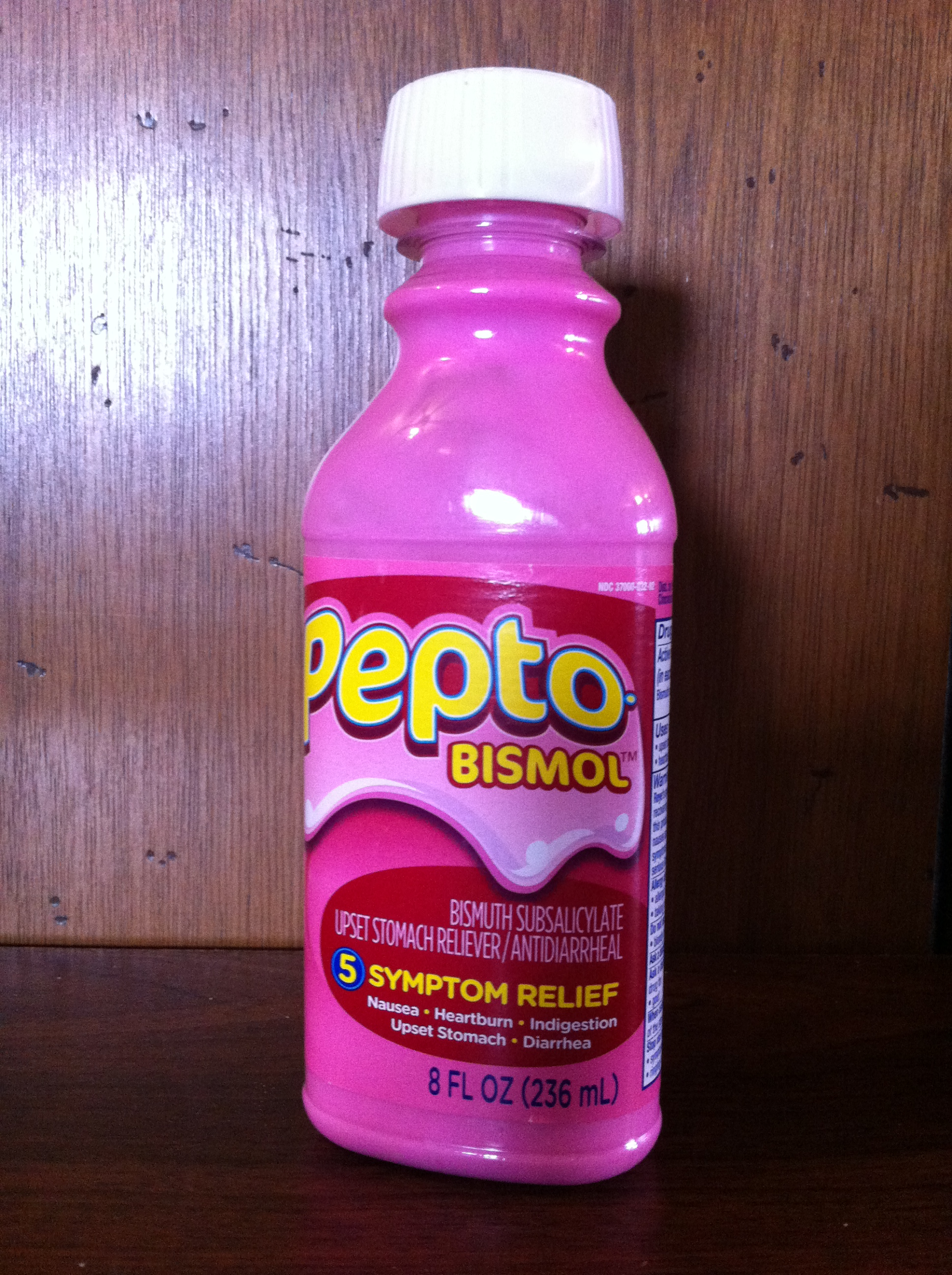
Adsorption is the adhesion of molecules to a surface. This process differs from absorption, where a substance is dissolved or penetrates into a surface. Bismuth subsalicylate (brand name Pepto Bismol) is an example of an adsorbent (see Figure 9.6a).
It is used for a variety of digestive conditions including traveler’s diarrhea, heartburn, nausea and stomach upset. It is also used in the treatment of H.Pylori pathogen, and as part of quadruple therapy with antibiotics, and a proton pump inhibitor. It is available OTC.
Mechanism of Action
Adsorbent medications work by coating the walls of the GI tract and binding the causative bacteria or toxin for elimination from the GI tract through the stool (Lilley, Collins and Snyder, 2014). Bismuth subsalicylate also decreases the flow of fluids and electrolytes into the bowel, reducing inflammation within the intestine (A.D.A.M, 2019).
Nursing Considerations
Administration: oral formulas. Liquid products should be shaken well before use. Tablets should be swallowed whole and not chewed unless they are a chewable tablet.
Bismuth subsalicylate is not recommended during pregnancy or breast feeding.
Drug interactions are common and adsorbents can decrease the effectiveness of many meds, such as digoxin, and antihyperglycemics. It can cause increased bleeding in clients taking warfarin.
Adverse/ Side Effects:
Common side effects include nausea, bitter taste, and dark/black stools.
A blackened tongue is less common, but may be seen if taking the medication for prolonged period of time.
If symptoms worsen, a fever, or ringing in the ears occurs, or if diarrhea lasts longer than 48 hours, contact the provider (A.D.A.M, 2019; Budisak, Patel & Abbas, 2024).
Allergy to salicylates: Bismuth subsalicylate contains salicylate. It should be avoided if the client has an allergy to salicylates (including aspirin) or if the client is taking other salicylate products such as aspirin. It should not be used if the client has an ulcer, a bleeding problem, or bloody or black stool.
Risk of Reyes Syndrome: Children and teenagers who have or are recovering from chickenpox or flu-like symptoms should not use this product. When using this product, if changes in behavior with nausea and vomiting occur, consult a doctor because these symptoms could be an early sign of Reye’s syndrome, a rare but serious illness.
Client Teaching:
- Clients should be advised to take medication as directed.
- Excessive use can cause toxicity, and although rare, can lead to impaired cognition, tremors and insomnia (Budisak, Patel, Abbas, 2024).
- They should be aware of potential color changes to stool that may occur and that the medication contains aspirin.
Example in Practice
A client has had a mechanical valve replacement inserted a few months ago and is on warfarin. They developed diarrhea, which they suspect is due to a traveler’s bug from their recent vacation. The client goes to their medicine cupboard and takes out Pepto Bismol which has been effective in relieving occasional diarrhea. This med has been effective in the past, but is it safe to use now?
Pepto Bismol (bismuth subsalicylate) contains salicylates (aspirin-like compounds) that can increase warfarin’s effect. The client may experience a higher risk of bleeding, bruising, or severe gastrointestinal issues. This client should not take the adsorbent, and plan to take a different anti-diarrheal.
Antimotility
Antimotility medications help to treat diarrhea by slowing peristalsis. There are two categories of antimotility medication: anticholinergics and opiate-like medication. Both are typically used in more severe cases of diarrhea.
Anticholinergics
Hyoscyamine is an anticholinergic that works on the smooth muscle of the GI tract to inhibit propulsive motility, and decreases gastric acid secretion.
Specific Administration Considerations
Read drug label information for all contraindications, including but not limited to glaucoma, myasthenia gravis, and paralytic ileus. Diarrhea may be an early symptom of incomplete intestinal obstruction, and the use of this drug would be inappropriate and possibly harmful. CNS symptoms and other adverse effects that are common with anticholinergic medications may occur (Opentextbc, n.d.).
Client Teaching
Clients should receive instruction that these medications may cause dizziness and drowsiness. If clients experience dry mouth, frequent oral hygiene may alleviate discomfort (Opentextbc, n.d.).
Opioid-like medications:
This drug class is the most effective for symptomatic treatment of diarrhea. There are three drugs: codeine sulfate, diphenoxylate hydrochloride with atropine sulfate and loperamide. Loperamide is the only one available OTC as the others have more risks. Our prototype med will be loperamide.
Prototype: Loperamide
Loperamide is used for treat various forms of diarrhea, including to treat the adverse effects of chemotherapy-induced diarrhea. It is used off label for opioid withdrawal symptoms.
Mechanism of Action
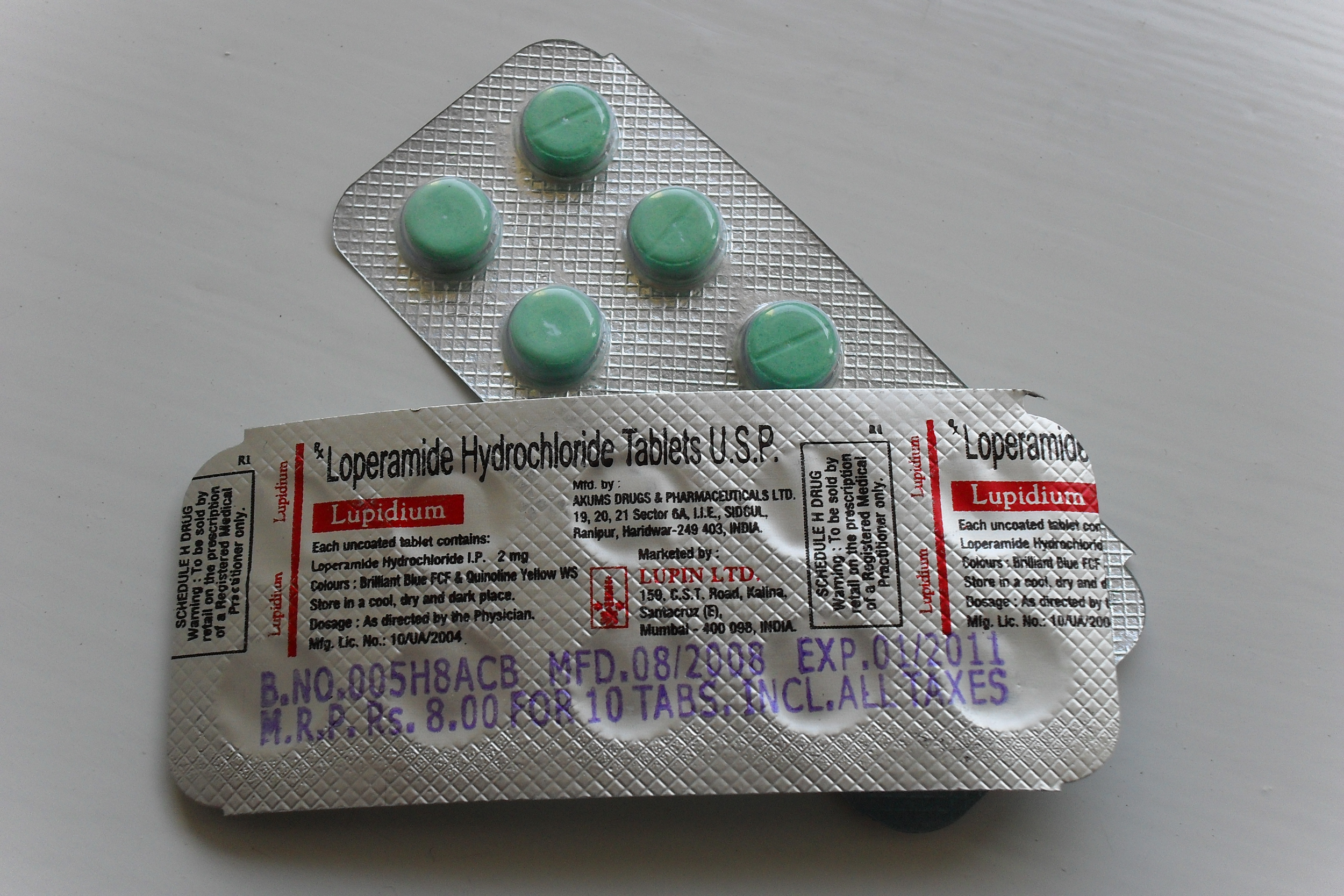
Loperamide has an opioid-like chemical structure but causes fewer CNS effects. It binds to opiate receptors in the intestinal wall, inhibiting the release of acetylcholine and prostaglandins, leading to a decrease in peristalsis and transit time (Sealock & Seneviratne, 2021). By decreasing the flow of fluids and electrolytes into the bowel and by slowing down the movement of the bowel, less bowel movements is the result. It also increases anal tone which helps avoid incontinence. (see Figure 9.6b).
Nursing Considerations
Loperamide should not be given to a child younger than two years of age because of the risk of respiratory depression and heart problems.
Taking more than the prescribed dose can cause a serious abnormal heart rhythm that can lead to death.
Read the drug label carefully for information about interaction with other medications, especially antidysrhythmic and antipsychotics
Physical dependence is not a concern as with other opiate medications. (ADAM, 2019; Sealock & Seneviratne, 2021).
Contraindicated for clients with GI disorders such as ulcerative colitis, pseudomembranous colitis. Consult the health care prescriber for treatment options.
Side effects:
Numerous side effects can occur but typically well tolerated. These include: dry mouth, flatulence, abdominal cramps, nausea, constipation, urinary retention, drowsiness
Adverse effects: Serious adverse effects can include cardiac dysrhythmias, and toxic megacolon. Take only as prescribed and consult the health care provider if symptoms do not resolve.
Client Teaching
- Loperamide comes in tablets, capsules, liquid and orodispersible tablets (dissolve on the tongue). Clients should take medications as directed.
- Take 30 minutes before a meal to decrease colonic activity. Stop taking if no diarrhea for 24 hours or if solid/hard stools develop.
- Avoid alcohol and other CNS depressants as the combined effect may cause drowsiness.
Other opiate-like antidiarrheals is diphenoxylate hydrochloride with atropine sulphate (Lomotil). It works on the smooth muscle of the GI tract, decreasing gastric motility. Although it has no analgesic activity, it is still prone to misuse. To discourage misuse, atropine is added to the formula, so if taken in large doses, anticholinergic effects will occur (dry mouth, abdominal pain, tachycardia).
Sahi, Nguyen, Patel & Santos (2024); Sealock & Seneviratne (2021).
Probiotics
Probiotics are used for the prevention and treatment of diarrhea. They are sometimes referred to as intestinal flora modifiers. They are often used concomitantly with antibiotics to prevent the common associated side effects of diarrhea (see Figure 9.6c). An example of a probiotic is lactobacillus.

Mechanism of Action
Probiotics help replenish normal bacterial flora in the gastrointestinal tract, leading to a suppression of growth of pathogenic bacteria.
Specific Administration Considerations/ Client Teaching & Education
Probiotics can be obtained by drinking lactobacillus milk or eating yogurt or kefir with live or active culture (not all yogurts have live culture). Supplements are also available.
Side effects of probiotics, such as gas and bloating, are mild. Probiotics are safe for use in children (Adams et al, 2019).
Evaluating the effectiveness of anti-diarrheal medications
Antidiarrheals only treat the symptoms of diarrhea and do not eliminate the cause. Advise clients if their symptoms do not start to decrease within 48 hours, they should see their health care provider.
Evaluate for dehydration and encourage clients to drink fluids to replenish any fluid loss. The risk of dehydration is greater in children and the elderly, monitor closely. If significant diarrhea, consider electrolyte imbalance and the need for serum electrolytes to be drawn.
In general, the client should seek out further treatment if:
- Symptoms worsen
- Symptoms last more than 14 days
- Diarrhea does not begin to improve within 48 hours
- They develop other symptoms such as fever, severe abdominal pain.
- They develop blood in the stool.
Now let’s take a closer look at the medication grids comparing medications used to treat diarrhea, in Table 9.6
Medication cards like this are intended to assist students to learn key points about each medication. Because information about medication is constantly changing, nurses should always consult evidence-based resources to review current recommendations before administering specific medication. Basic information related to each class of medication is outlined below.
| Class | Prototype/Generic | Administration Considerations | Therapeutic Effects | Adverse/Side Effects |
| Adsorbents | bismuth subsalicylate (Pepto Bismol) | Avoid if taking other salicylates. Do not use in children or teenagers recovering from chickenpox or flu-like symptoms as may cause Reye’s syndrome.
Do not use if the client has an ulcer, bleeding problem, or bloody or black stool. |
Decreased diarrhea symptoms | May cause black or darkened tongue. Contact provider if symptoms worsen, a fever or ringing in the ears occurs, or if diarrhea lasts longer than 48 hours. |
| Anticholinergic | hyoscyamine | Contraindicated in glaucoma, myasthenia gravis, or paralytic ileus. | Decreased diarrhea symptoms | May cause CNS and other adverse effects associated with anticholinergic medication. |
| Opiate-like medication | loperamide (Imodium) | Contraindicated in children younger than 2 and with several other medications; read drug label information before administering. | Decreased diarrhea symptoms | Black Box Warning: May cause abnormal heart rhythm. |
| Probiotics | lactobacillus | Pediatric dosing is age-based and varies by product. | Prevention of diarrhea or decreased symptoms of diarrhea | Mild, such as gas and bloating. |
 Clinical Reasoning and Decision Making Activities
- A client has been prescribed loperamide for diarrhea associated with gastroenteritis. The client begins to complain of “heart palpitations.” What is the nurse’s next best response?
- A child, aged 6, has diarrhea. The mother asks the nurse what OTC medications she can provide to her child to help resolve diarrhea. What is the nurse’s best response?
Note: Answers to the Clinical Reasoning Activities and Critical Thinking questions can be found in the Chapter 9: Gastrointestinal Medications Answer Key – Fundamentals of Nursing Pharmacology – 2nd Canadian Edition sections at the end of the book.
References
Adams, M., Urban, C., El-Hussein, M., Osuji, J. & King, S. (2018). Pharmacology for Nurses. A pathophysiological approach (2nd Canadian ed.). Chapter 35: Pharmacotherapy of Bowel Disorders and other Gastrointestinal Alterations. Pearson Canada Inc: Ontario.
A.D.A.M. Medical Encyclopedia [Internet]. Atlanta (GA): A.D.A.M., Inc.; ©2019. Heartburn; [reviewed 2019 May 10; cited 2019 October 27]. https://medlineplus.gov/ency/anatomyvideos/000068.htm
Budisak, P., Patel, P., and Abbas, M. (2024). Bismuth Subsalicylate. National Library of Medicine, StatPearls [Internet]. Bismuth Subsalicylate – StatPearls – NCBI Bookshelf
Lilley, L., Collins, S., & Snyder, J. (2014). Pharmacology and the Nursing Process. pp. 782-862. Elsevier. ↵
McCuistion, L., Vuljoin-DiMaggio, K., Winton, M, & Yeager, J. (2018). Pharmacology: A patient-centered nursing process approach. pp. 443-454. Elsevier. ↵
Sahi, N., Nguyen, R., Patel, P. & Santos, C (2024, February 28). Loperamide. National Library of Medicine, StatPearls [Internet]. https://www.ncbi.nlm.nih.gov/books/NBK557885/
Sealock, K. & Seneviratne, C. (2021). Lilley’s Pharmacology for Canadian Health Care Practice (4th ed.). Elsevier: Canada
World Health Organization. (2017, May 2). Diarrhoeal disease.https://www.who.int/en/news-room/fact-sheets/detail/diarrhoeal-disease ↵
Media Attributions
- “PeptoBismol Bottle.JPG” by ParentingPatch is licensed under CC BY-SA 3.0 ↵
- “Loperamide2mg.JPG” by Kristoferb is licensed under CC BY-SA 3.0 ↵
- “WildWood Probiotic Soyogurt” by Veganbaking.net is licensed under CC BY-SA 2.0 ↵
Medications that help to treat diarrhea by slowing peristalsis.
The adhesion of molecules to a surface. For example, bismuth salicylate coats the walls of the GI tract and binds the causative bacteria or toxin for elimination from the GI tract through the stool.