1.1 Medication Classification
Individuals take a wide variety of substances to find relief from health issues or enhance wellness. Having an accurate record and knowledge of the different types of substances a client is taking is important to the client’s medical and nursing care plan. It is also important to note any substances that are prescribed, over-the-counter, or herbal that have been taken in the past month, as some medications have a long half-life and may still be in the body with the potential to interact with new medications.
Therapeutic Agents
Drugs and medications are one category when we consider substances that have an effect on the body. Other categories include natural health products and biologics.
So, therapeutic agents include:
- medications or drugs,
- natural health products, and
- biologics and biosimilars.
Medications or Drugs
As discussed in the previous unit, a drug is a chemical agent that is capable of producing a biological response within the body (Adams et al., 2018). A drug is considered a medication if it is medically therapeutic. They are used extensively for prevention and treatment for almost any ailment, condition, or disease and ultimately produce a desirable therapeutic effect. All drugs have the risk of adverse reactions including side effects and adverse effects. Most medications fall into two categories, prescription medications or over-the-counter.
Prescription Medications
Prescription medications are prescribed by a licensed prescriber for a specific person’s use and are regulated through the Health Products and Food Branch (HPFB) of Health Canada. To obtain a prescription medication, the client is first assessed by a health care provider qualified to prescribe medications. Following a diagnosis, the medication is prescribed with attention to the dose and duration of the medication use. To learn more about HPFB approval of medications, go to the Therapeutic Products Directorate page of the HPFB website. Medication regulation and approval is also discussed in Chapter 2: Medication Safety: Professional and Legal Foundations.
Over-the-Counter Medications
Over-the-counter (OTC) medications do not require a prescription. They can be bought at a store, usually a pharmacy, and may be used by multiple individuals. OTC medications are also regulated through Health Canada and are considered safe to use if taken as instructed. There are over 80 classes of OTC drugs, including pain and fever reducers, laxatives, antidiarrheals, and cold, cough, and allergy medications. Although generally safe, they do carry risks if not taken as recommended on the label. Some prescription medications are available for purchase as OTC in smaller doses. For example, diphenhydramine (Benadryl) is commonly prescribed as 50 mg every 6 hours, and the prescription strength is 50 mg. However, it can also be purchased OTC in 25 mg doses (U.S. Food & Drug Administration, 2017).
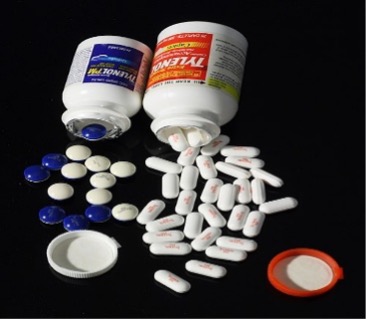
The Risk of Acetaminophen
Acetaminophen, a commonly used analgesic and antipyretic, is considered a safe, effective medication to relieve mild to moderate pain or to bring down a fever. If used as prescribed, it is very safe. But it can pose risks for some clients, such as those with pre-existing liver or renal disease or those who take it in much greater quantities than recommended. Acetaminophen is metabolized in the liver, and if taken as an intentional or unintentional overdose, it can lead to toxicity and a cascade of oxidative hepatocyte injury. It is the second most common cause of liver transplantation worldwide and the most common cause of liver failure in Canada. Of the more than 250 cases of serious liver injury per year in Canada related to acetaminophen, over half were unintentional overdoses (Government of Canada, 2015). As an OTC medication, health education is important!
Natural Health Products
Natural health products include natural plant extracts, vitamins, minerals, enzymes, and dietary supplements. Health Canada has a Natural and Non-prescription Health Products Directorate that is responsible for authorizing natural/non-prescription products that meet safety, efficacy, and quality standards (Health Canada, 2025). Although most herbal supplements are of low risk if taken correctly, the manufacturing company must abide by the regulations and hold a valid product and site licence and follow good manufacturing practices (Health Canada, 2024).
Many people take supplements to improve their health and although most are safe, they are not without risk. One such risk is adverse effects, especially those that occur when combining supplements with a prescribed drug with similar ingredients or actions. For example, St. John’s wort is easily available at natural health food stores and is sold to improve mood, among other effects. If a client uses St John’s wort alongside a prescribed antidepressant, they can experience excessive serotonin symptoms. Supplements such as “protein powders” are marketed to build muscle mass and are typically very safe. However, they can also pose a risk to a client if taken in larger doses than prescribed and may not be appropriate for all individuals (Patel et al., 2023). In 2021, an audit of the Natural Health Product Regulations revealed further revisions may be coming to improve client safety through improved labelling and increased oversight (Health Canada, 2024).
Natural health product use and accessibility has increased in Canada and are an important part of many clients’ diet and health regime. As such, the nurse must ask about possible use and ensure these products are part of the client’s medication profile to avoid possible adverse effects.
Biologics and Biosimilars
Biologics are produced by microorganisms, such as those in animal cells or in the body. They are used to treat many health issues, such as anemia, diabetes, hormone deficiency and some forms of cancer. They are often made using biotechnology. Some examples include vaccines, hormones, and monoclonal antibodies, which are all derived from a living source. In some circumstances, such as gene therapy, they offer targeted therapy for some conditions, such as autoimmune disorders.
Biosimilars, or a biosimilar biologic drug, are biologically derived and synthetically produced drug that is highly similar to a biologic drug that was already authorized for sale (Health Canada, 2019). They are similar in efficacy and safety and can be produced at a lower cost than the equivalent biologic drug.
All biologics and biosimilars are authorized by Health Canada for sale in Canada and go through regulatory processes similar to other drugs.
 Critical Thinking Out Loud
A client, 41-year-old Jas, comes into the health clinic as they have been experiencing symptoms of depression for some time. The nurse completes a health history and asks Jas about the prescription medications they are currently taking or have taken in the recent past. Jas informs the nurse that they do not take any prescription medications and, besides their current state, consider themselves healthy. Jas sees the physician who then prescribes a selective serotonin reuptake inhibitor (SSRI) antidepressant with the plan that they will go for counselling and return in one month for follow up.
At Jas’s follow up appointment, they state that they take the SSRI as prescribed and have seen a counsellor. They report feeling a bit better but have noticed a tremor in their hands and are feeling quite nauseated. This time, the nurse asks more questions about their medication use, to best understand their symptoms. She learns that Jas takes St. John’s Wort on a regular basis and has been on it for over six months. They also take other health supplements, such as protein powders and vitamin supplements.
This new information helps determine if the side effects are from the SSRI or from the combination of the other supplements, in particular St John’s Wort. After seeing the physician, the nurse provides some health teaching. She explains that using St John’s wort with an antidepressant can lead to some of the symptoms they are experiencing and that they need to stop taking it to avoid more negative health effects. She emphasizes that supplements should always be disclosed when providing a health history as they can have a compounding or negative effect when combined with other medications.
St. John’s wort is a herbal supplement that interacts with drugs classed as selective serotonin reuptake inhibitors. It has the potential to cause a potentially fatal condition known as serotonin syndrome. When taking a medication history, it is vital nurses ask about herbals and supplements, as many interact with prescription medications.
References
Adams, M. P., Urban, C. Q., El-Hussein, M., Osuji, J. & King, S. (2018). Pharmacology for nurses. A pathophysiological approach (2nd Canadian ed.). Pearson.
Government of Canada (2015). Summary safety review – Acetaminophen – liver injury. https://dhpp.hpfb-dgpsa.ca/review-documents/resource/ssr00120
Health Canada (2019). Biosimilar biologic drugs in Canada: Fact sheet. Government of Canada. https://www.canada.ca/en/health-canada/services/drugs-health-products/biologics-radiopharmaceuticals-genetic-therapies/applications-submissions/guidance-documents/fact-sheet-biosimilars.html
Health Canada (2024). Natural health product regulation in Canada: Overview. https://www.canada.ca/en/health-canada/services/drugs-health-products/natural-non-prescription/regulation.html
Health Canada (2025). Natural and non-prescription health products directorate. Government of Canada. https://www.canada.ca/en/health-canada/corporate/about-health-canada/branches-agencies/health-products-food-branch/natural-non-prescription-health-products-directorate.html
Patel, V., Aggarwal, K., Dhawan, A., Singh, B., Shah, P., Sawnhey, A., & Jain, R. (2023). Protein supplementation: The double-edged sword. Baylor University Medical Center Proceedings, 37(1), 118–126. https://doi.org/10.1080/08998280.2023.2280417
Sealock, K., & Seneviratne, C. (2021). Lilley’s pharmacology for Canadian health care practice (4th ed.). Elsevier.
U.S. Food & Drug Administration. (2017). Prescription drug and over-the-counter drugs: Questions and answers. https://www.fda.gov/drugs/questions-answers/prescription-drugs-and-over-counter-otc-drugs-questions-and-answers
Media Attributions
- Figure 1.1.1 Extra Strength Tylenol and Tylenol PM by Ragesoss, via Wikimedia Commons, is used under a CC BY-SA 4.0 license.