8.7 Antitussives
A cough is one part of the respiratory defence mechanisms. It protects the lungs from inhaled particles, microorganisms and toxic gases (Tyerman & Cobbett, 2023). Other defences include the filtration of air through the nasal passages, the mucociliary clearance system within the trachea and bronchioles, reflex bronchoconstriction and alveolar macrophages. The cough reflex can be initiated by an irritant within the bronchial mucosa or from other sites not part of the respiratory tract. Coughing is important to remove foreign matter or a buildup of secretions, and in these situations, coughing should not be suppressed. But, some coughs are not beneficial, as they are non-productive, irritating and prevent rest.
When a client reports that they have a cough, a nurse completes a thorough assessment of their health conditions, medications, and other symptoms that they may be experiencing. A functional assessment is important to learn about their exercise tolerance and sleep habits, along with their self-care practices (diet, exercise, smoking, immunizations).
Subjective assessment specific to the cough:
- When did the cough start? How often do you cough? Does it wake you up at night?
- What relieves the cough? What makes it worse?
- Do you have any sputum? What colour and consistency? Do you cough up any blood?
Other respiratory assessment questions include asking about shortness of breath, other breathing issues, chest pain with breathing, and any remedies they have tried to alleviate the cough.
After completing the subjective assessment, a physical assessment is completed that includes vital signs, chest auscultation and work of breathing.
If a cough suppressant is needed, antitussives can be obtained either OTC or if the cough is severe, with a prescription. There are two types of antitussives, opioids and non-opioid antitussives. Opioid antitussives include codeine which is a very effective cough suppressant. It acts within the CNS to elevate the cough threshold. It is only used with adults due to safety concerns of respiratory depression in children (Rosenjack Burchum & Rosenthal, 2019).
Non-opioid antitussives include dextromethorphan and diphenhydramine. Dextromethorphan is the most effective OTC nonopioid to suppress cough and this medication will be the focus of this unit.
Dextromethorphan
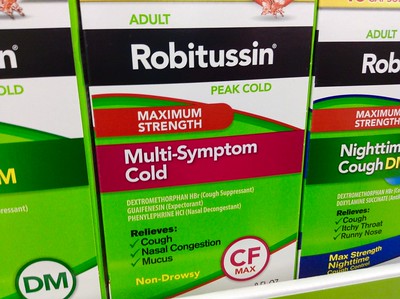
Dextromethorphan is an effective OTC cough suppressant. It is the active ingredient in most cough medicines.
Mechanism of Action
Dextromethorphan primarily acts as a noncompetitive antagonist of NMDA receptors in the brain along with other target sites. It depresses the cough center in the medulla oblongata and the cough receptors in the throat, trachea, or lungs, effectively elevating the threshold for coughing. It is a derivative of opioids but lacks typical analgesic and respiratory depression effects at therapeutic doses.
Indication for Use
Antitussives are used for a dry, hacking, nonproductive cough that interferes with rest and sleep.
Off label, it is also used for a number of other conditions such as stroke, seizure and with Parkinson’s disease clients.
Nursing Considerations
Administration: it is given orally, either in syrups, lozenges or tablets.
This medication is not recommended for children under the age of 4 years, without medical consult.
Dextromethorphan and acetaminophen are often used together, along with other meds, in cough medicines. Teach clients to not take more than the recommended daily amount of acetaminophen if they are taking it alongside the cough medicine.
Risk of serotonin syndrome if taking this medication with SSRIs and MAOI antidepressants.
Adverse/Side Effects
Dextromethorphan is well tolerated with minimal side effects. Adverse effects from cough suppressants are rare. The most commonly reported reactions include nausea and gastrointestinal discomfort, with drowsiness and dizziness also occurring in some clients.
Less common adverse effects are a rash or difficulty breathing.
At high doses, there is a risk of euphoria, hallucinations and disassociation. There are reports of the drug being used as a recreational drug (Frandsen & Pennington, 2018).
Client Teaching
- Clients should take care to avoid irritants that stimulate their cough.
- Use for dry, non-productive cough. If cough is productive, only take if recommended by prescriber.
- Risk of drowsiness, so take precautions if necessary.
- Avoid taking them with other CNS depressants or alcohol
- Advise that many OTC cough medicines have multiple drugs in the formula. Ensure to avoid taking higher dosages than recommended. For example, acetaminophen is in many combination medications.
- If symptoms persist more than 3-5 days seek medical assessment again (Velarde, 2020).
Media Attribution
- “Robitussin Cough Cold Flu Congestion decongestant Relief Medicine” by Mike Mozart is licensed under CC BY 2.0 ↵
References
Frandsen, G. & Pennington, S. (2018). Abrams’ clinical drug: rationales for nursing practice (11th ed.). Wolters Kluwer. ↵
Rosenjack Burchum, J., & Rosenthal, L. (2019). Lehne’s pharmacology for nursing care (10th ed.). Elsevier: Canada.
Tyerman, J. & Cobbett, S. (2023). Lewis’s medical-surgical nursing in Canada (5th ed.). Elsevier: Canada.
Velarde, G. (2020). Pharmacology Notes: Nursing Implications for Clinical Practice. Licensed under CC BY-NC-SA 4.0